

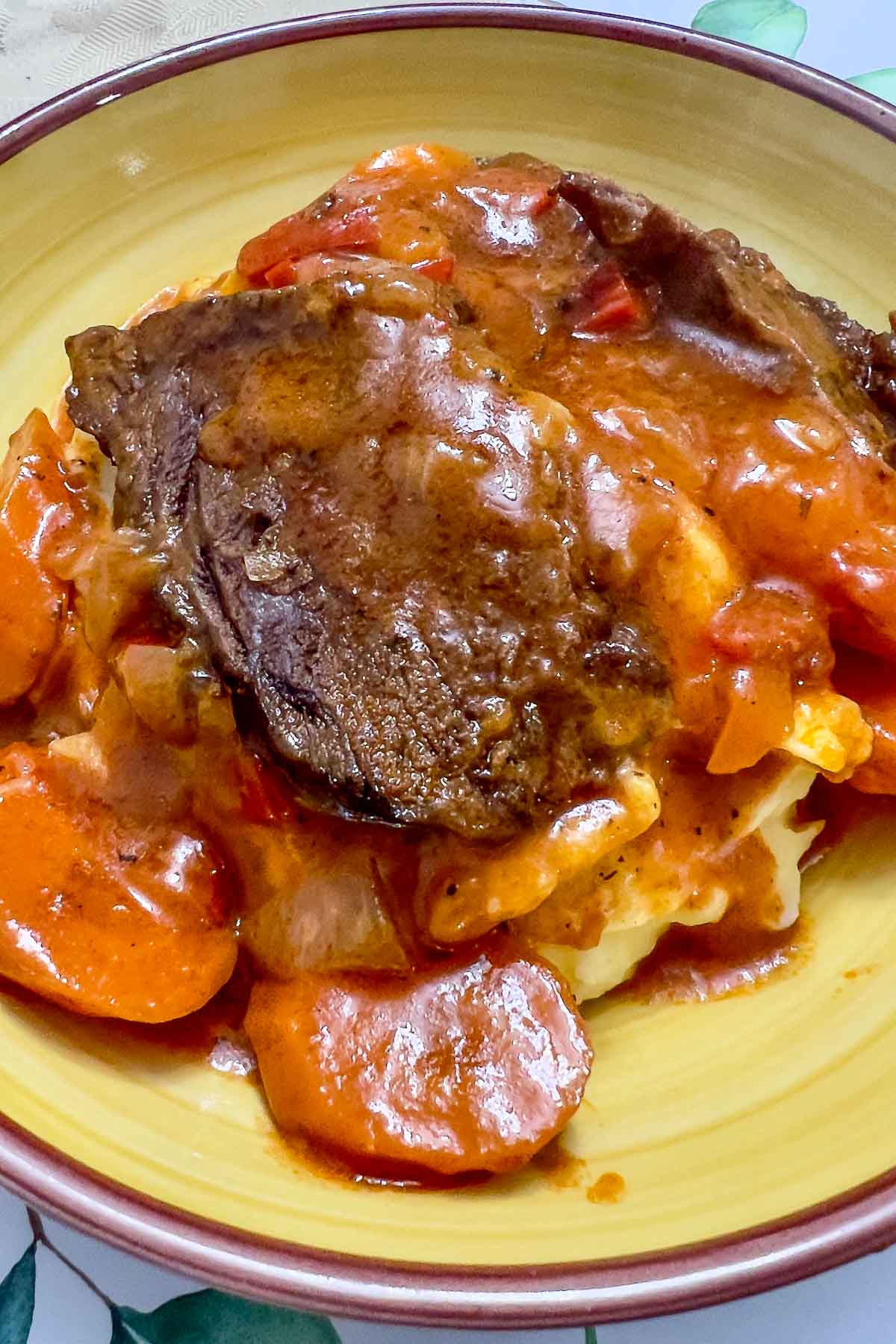
There is something deeply satisfying about putting a beef roast in the oven and leaving it there for a few hours while the Dutch oven does most of the work. This Dutch Oven Beef Pot Roast is slowly braised with carrots, onions, red bell pepper, garlic, and tomatoes until the meat is tender and the vegetables have flavored a rich, savory gravy.
Why This Dutch Oven Pot Roast Works
This is a straightforward pot roast, but a few details make a difference:
- The beef is browned first, which builds flavor before anything else goes into the pot. The onions, garlic, and red pepper are then cooked in those same browned bits instead of starting in a clean pan.
- I also add a little flour before the tomato puree and water. It gives the cooking liquid some body, so by the time the roast is tender, you have an actual gravy rather than a thin broth.
- Although many beef pot roast recipes include potatoes in the Dutch oven, they aren't necessary in this recipe. Carrots hold up much better during a long braise, while mashed potatoes served separately give the dish a better overall texture.
What Cut of Beef Is Best for Pot Roast?
Chuck roast is one of the best choices for pot roast because it contains enough fat and connective tissue to become tender during several hours of slow cooking.
The beef I used for this recipe weighed about 3 pounds. Depending on where you shop, the labeling may be different, so look for a well-marbled beef roast intended for slow cooking.
Other braising cuts can work as well. The important thing is not to choose a very lean roasting cut. Lean beef does not benefit from four hours in a covered Dutch oven in the same way chuck does.
Ingredients You Will Need
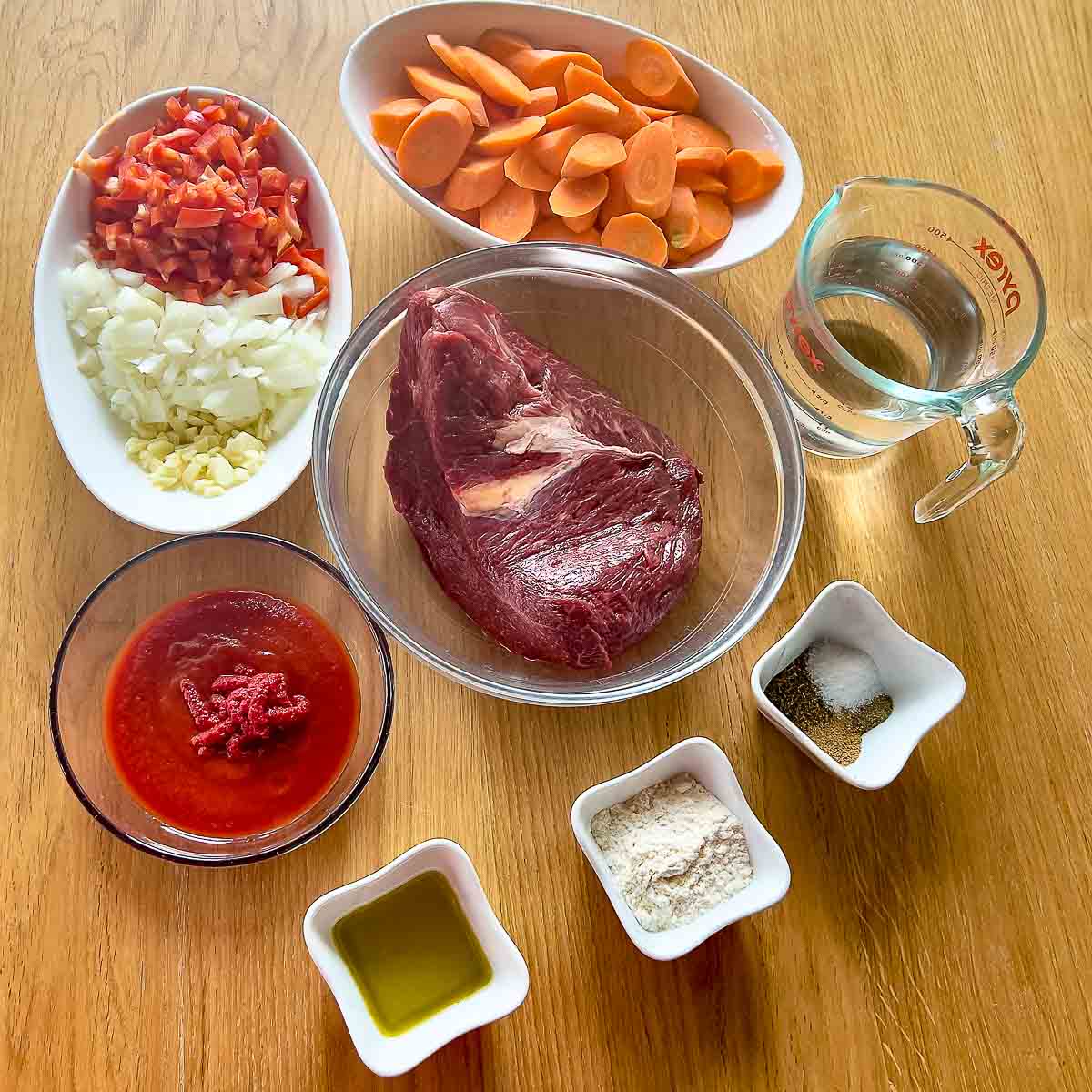
- Beef: A 3-pound beef chuck roast is a good size for this recipe and fits comfortably in a large Dutch oven.
- Onions, garlic, and red bell pepper: These vegetables form the base of the gravy. The red pepper adds sweetness and a little more depth to the tomato sauce without making the dish taste strongly of peppers.
- Carrots: I use four medium carrots, sliced fairly thickly. Thin slices would have very little chance after nearly four hours in the oven.
- Tomato puree and tomato paste: The combination gives the sauce both volume and concentration. Tomato paste alone would be too intense, while tomato puree by itself would not have quite the same depth.
- Flour: Two tablespoons of flour lightly thicken the braising liquid while it cooks.
- Thyme And Coriander: Thyme works naturally with beef and carrots. A small amount of ground coriander adds warmth without turning this into a heavily spiced dish.
- Water: You do not need an expensive stock to make a good pot roast. Between the browned beef, vegetables, tomatoes, and long cooking time, plain water develops plenty of flavor.
How To Make Beef Pot Roast in a Dutch Oven
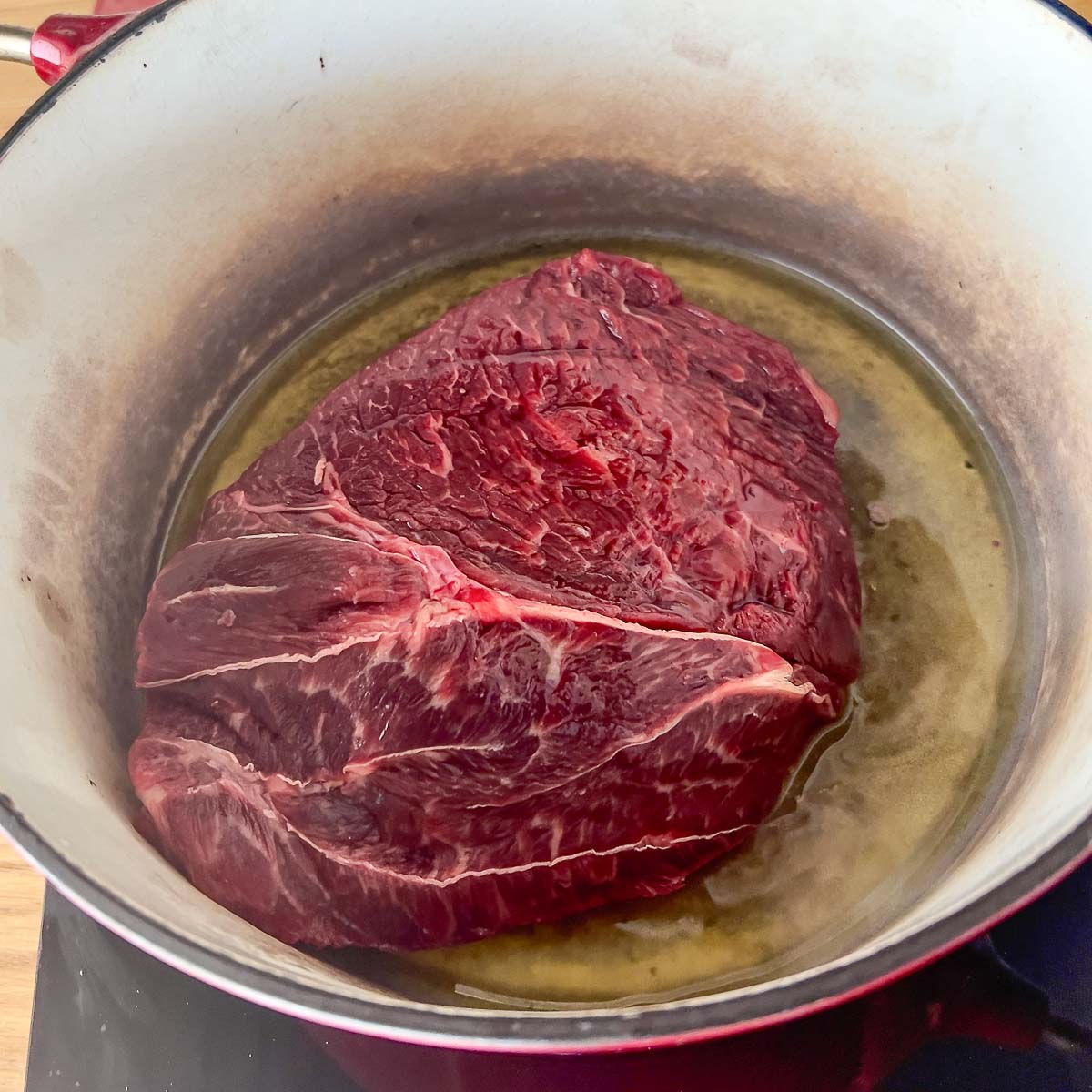
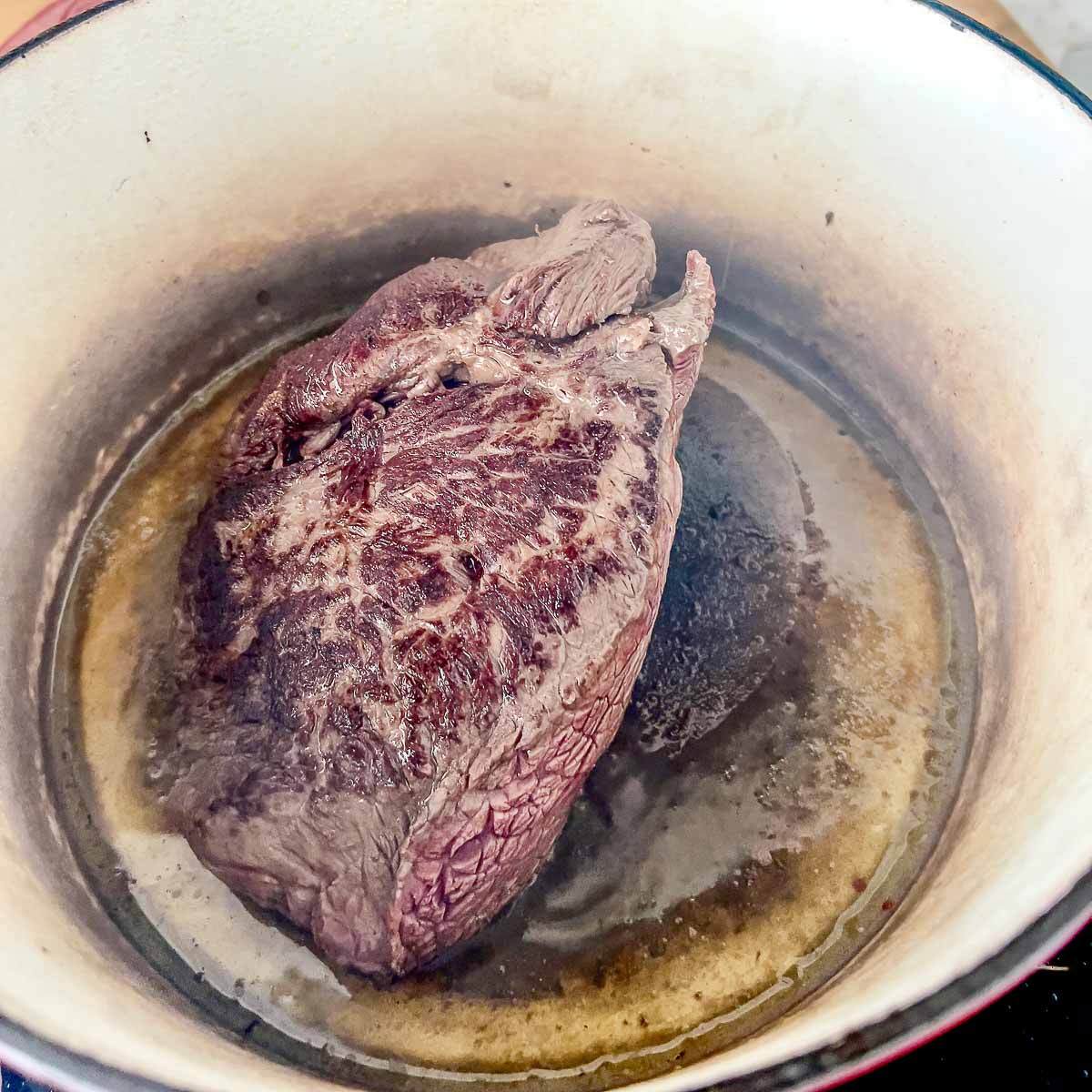
1. Brown the beef: Heat the olive oil in a large Dutch oven over medium-high heat. Season the beef with salt and black pepper, then brown it well on both sides. Give it time to develop some real color rather than simply turning gray. Remove the beef from the pot and set it aside.
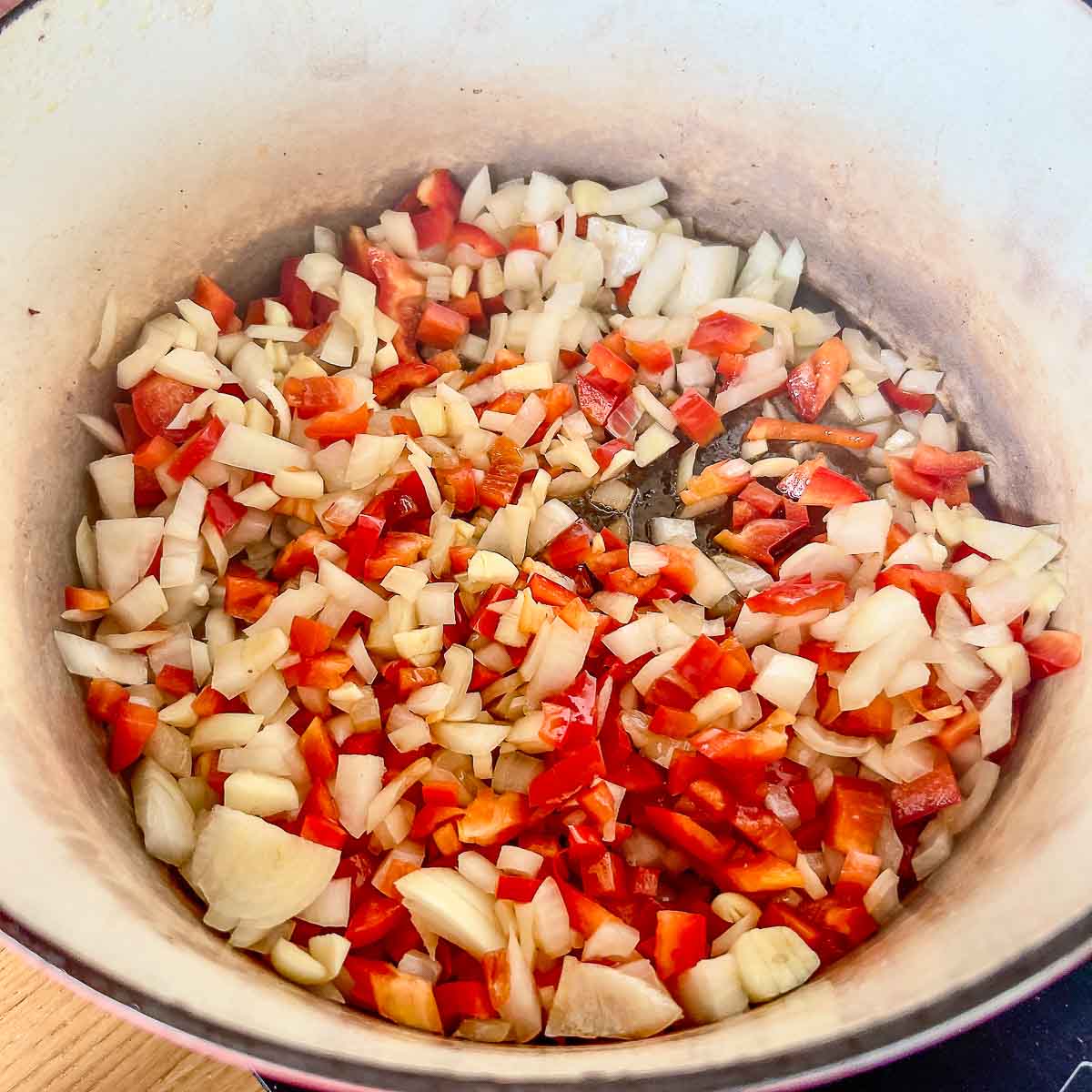
2. Cook the vegetables: Add the chopped onions, red bell pepper, and garlic to the same Dutch oven. Cook them for several minutes, stirring and scraping up some of the browned bits left behind by the beef.
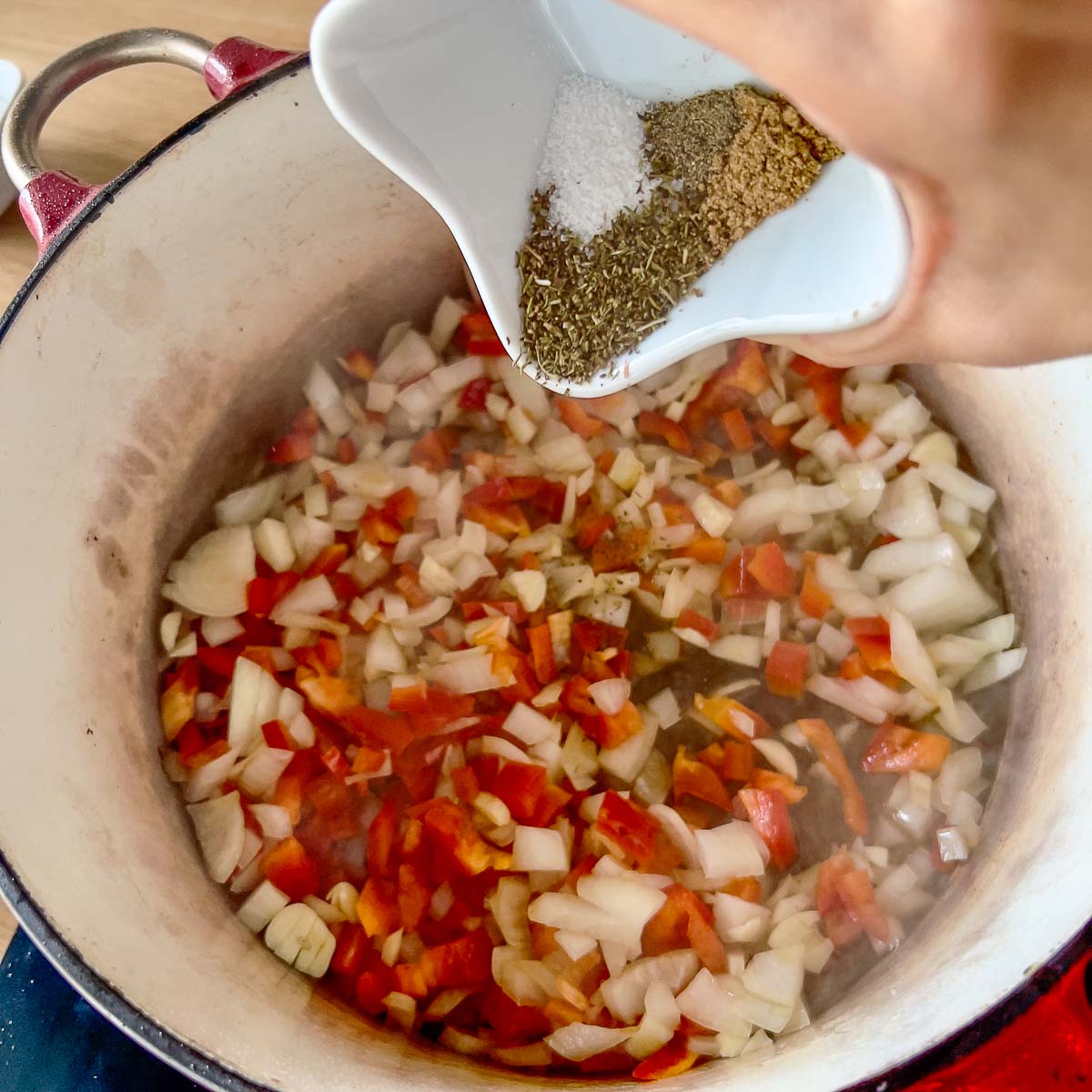
Add the thyme and ground coriander.
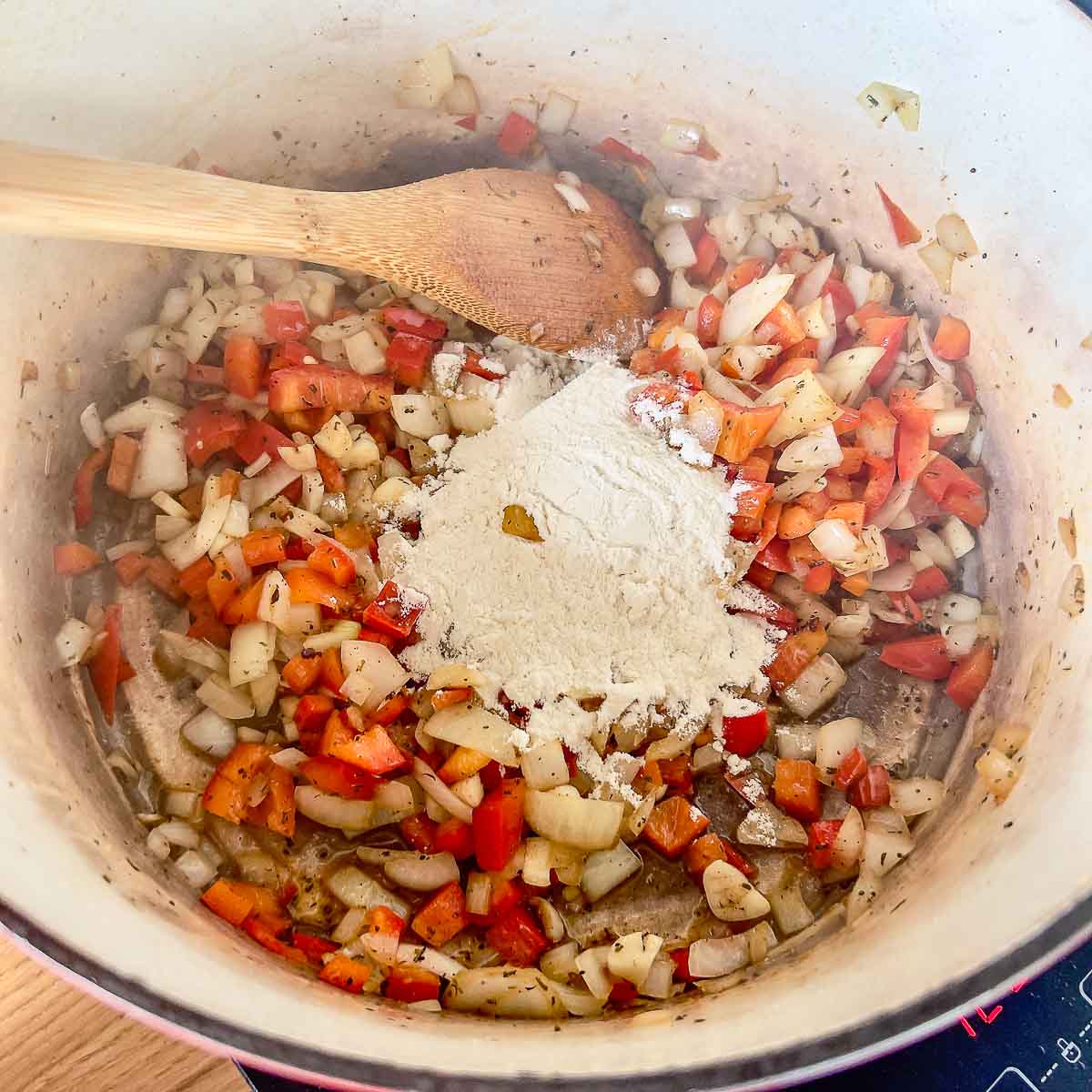
3. Build the gravy: Sprinkle the flour over the vegetables and cook it for about a minute.
Stir in the tomato puree and tomato paste and cook briefly again. This extra minute takes away the raw flavor of both the flour and tomato paste.
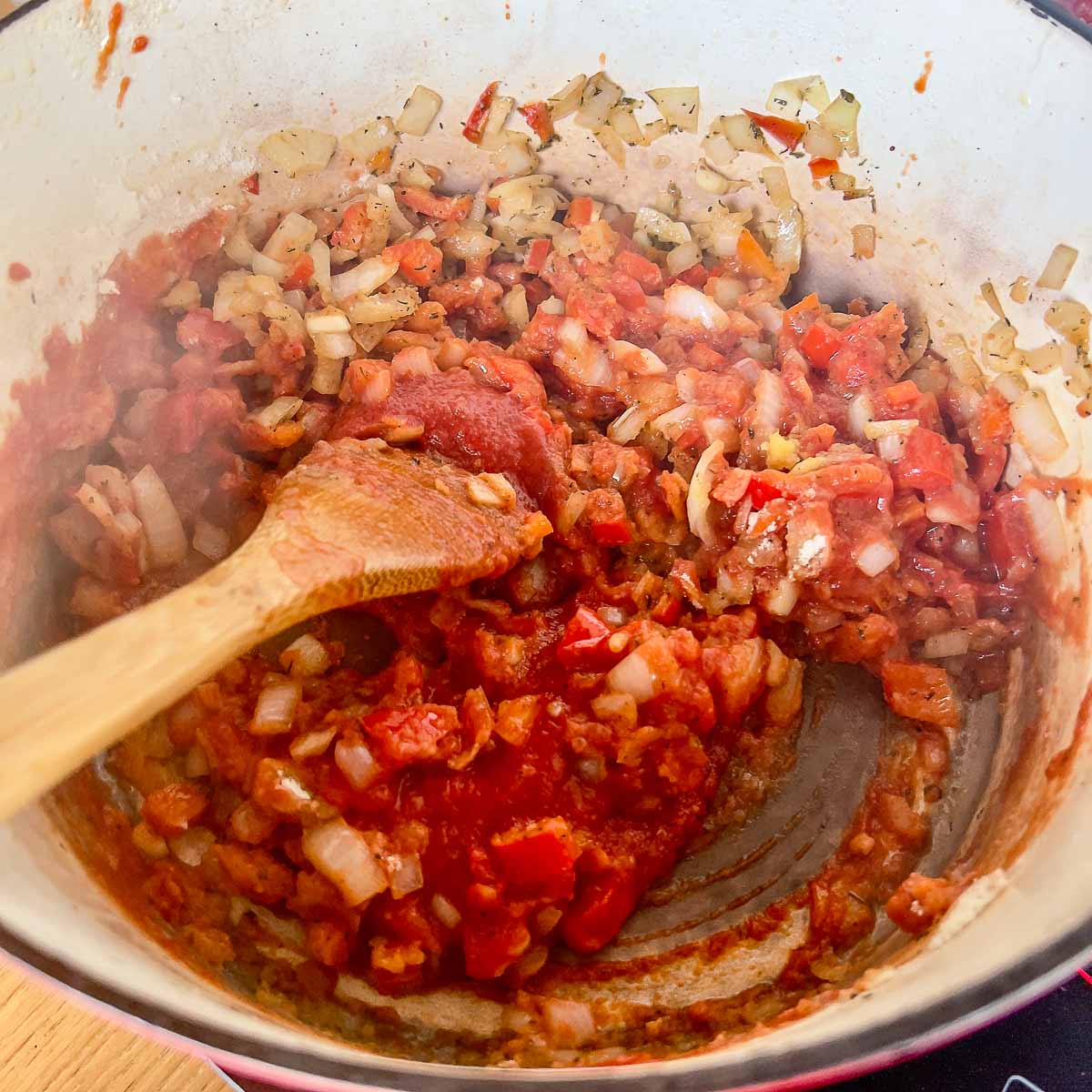
Gradually add the water while stirring.
4. Add the carrots and beef: Add the sliced carrots to the sauce.
Return the browned beef to the Dutch oven along with any juices that have collected on the plate.
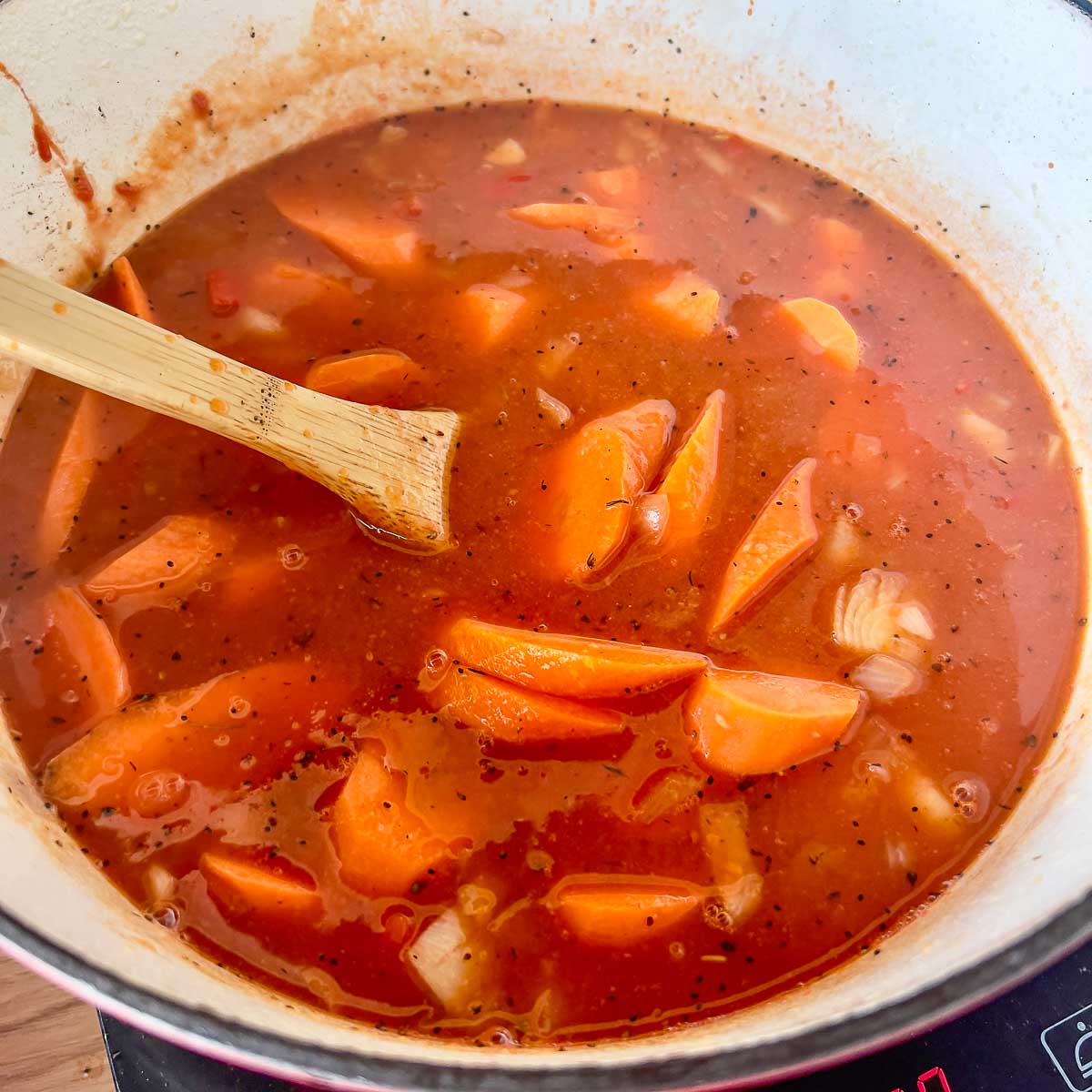
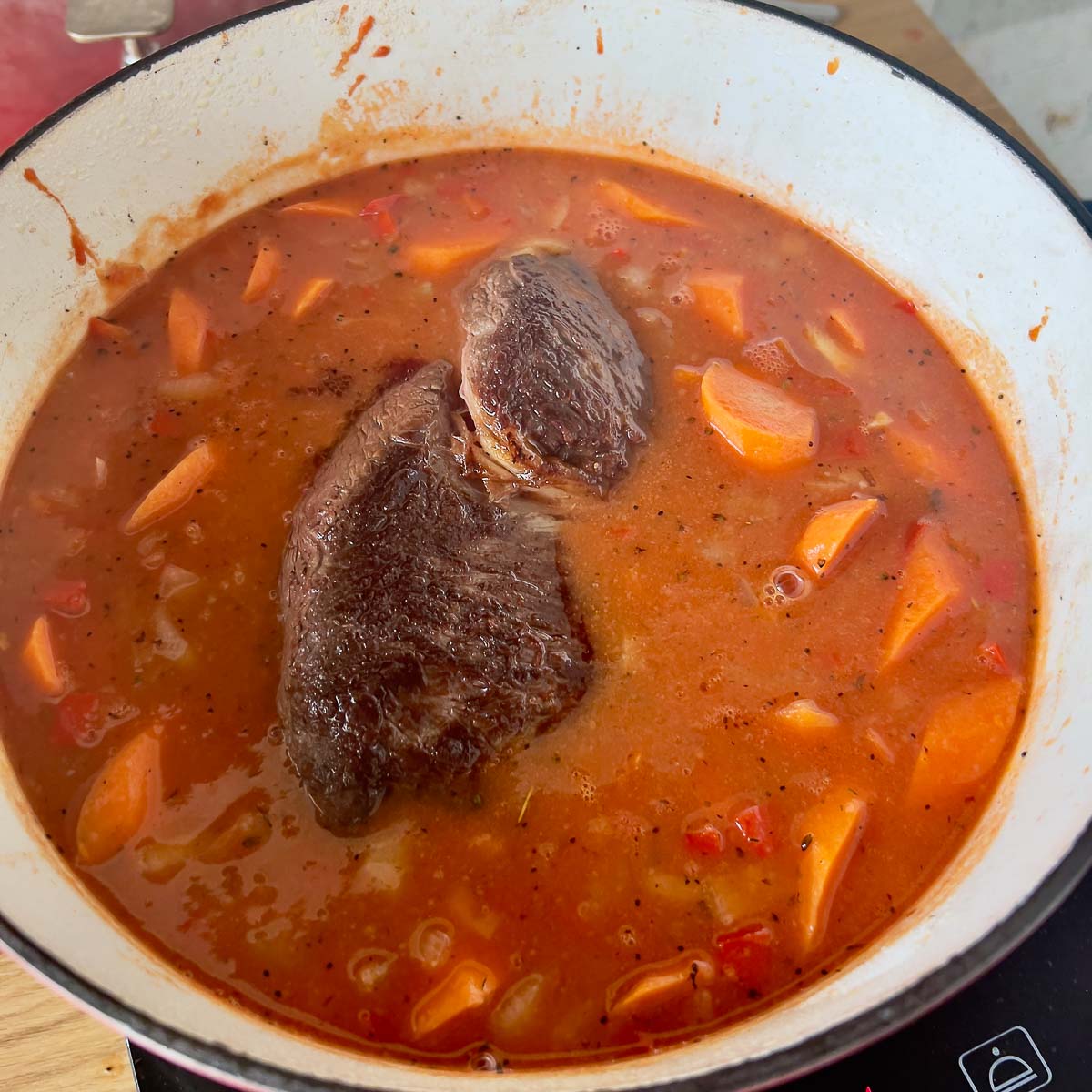
The roast does not need to be completely covered with liquid. Pot roast is braised, not boiled.
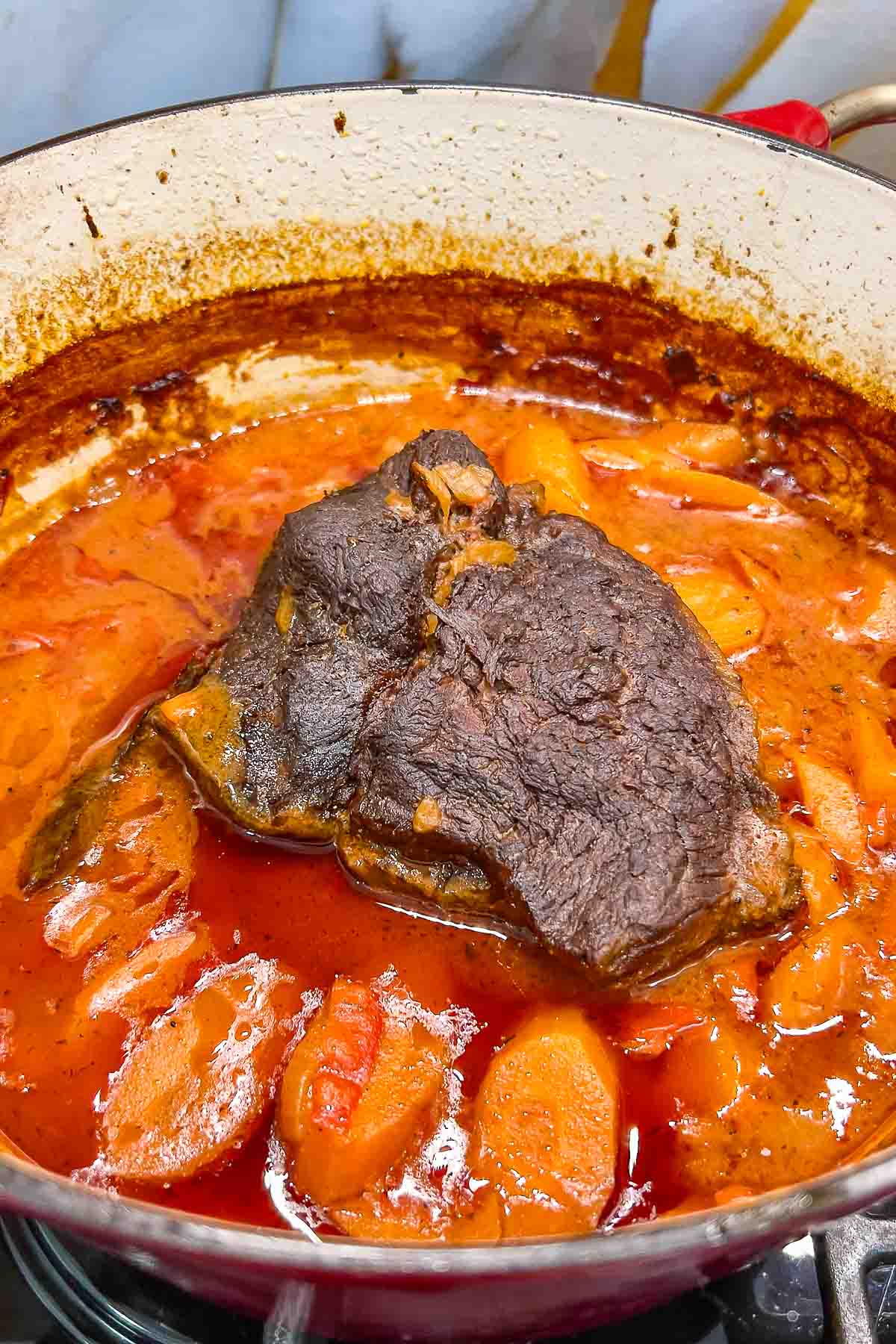
5. Cook slowly in the oven: Cover the Dutch oven and bake the roast at 350°F for approximately 3½ to 4 hours.
The exact cooking time depends on the cut and thickness of the beef, so use tenderness as your real guide.
When a fork goes easily into the meat and the roast begins to pull apart without much resistance, it is done.
How Long Does Pot Roast Take at 350°F?
For a 3-pound chuck roast, plan on approximately 3½ to 4 hours at 350°F in a covered Dutch oven.
You may occasionally see recipes telling you that a roast is finished after two or three hours. Sometimes it is. Sometimes it needs more time, as it depends on the type of meat and how tough it is. Pot roast cannot be hurried into tenderness.
If the beef still feels tough when you test it, that usually means the connective tissue has not had enough time to break down. Put the lid back on and keep cooking.
Why I Don't Add Potatoes to the Dutch Oven
Potatoes are common in pot roast recipes, but I intentionally left them out of this one. A roast this size can stay in the oven for close to four hours. Potatoes cooked that long can become extremely soft and start falling apart into the sauce.
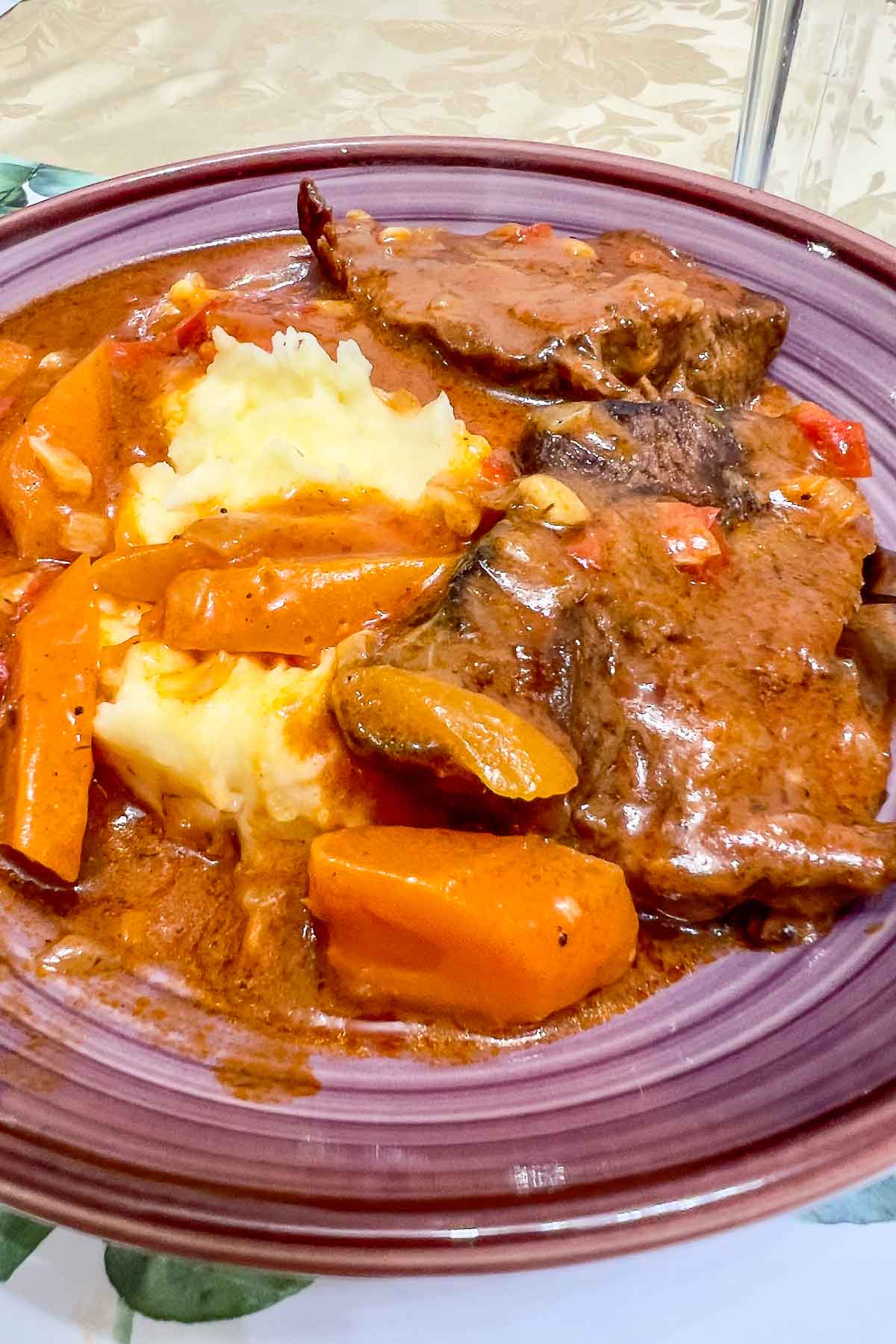
Instead, I serve this beef pot roast with mashed potatoes.
You get tender beef, carrots that still hold their shape, rich tomato gravy, and freshly made mashed potatoes, rather than potatoes that have surrendered completely to the Dutch oven around hour three.
What To Serve With Dutch Oven Pot Roast
Mashed potatoes are my first choice because the gravy deserves somewhere to go.
You could also serve the pot roast with:
- buttered egg noodles
- roasted potatoes
- mashed cauliflower
- crusty bread
- roasted or steamed green beans
- a simple green salad
If you want a traditional comfort-food dinner, though, beef pot roast with carrots and mashed potatoes is hard to improve upon.
How Do You Know When Pot Roast Is Done?
Do not rely entirely on a clock. A properly cooked chuck roast should be fork-tender. When you insert a fork and twist it slightly, the meat should separate easily.
If the roast is still chewy or difficult to pull apart, it probably needs more cooking rather than less.
This is one of those recipes where an extra 30 minutes can make the difference between a disappointing roast and a beautiful one.
Can I Make This Pot Roast Ahead?
Yes, and pot roast is one of those dishes that often tastes even better the following day.
Let everything cool, then refrigerate the beef in its sauce. The next day, remove any excess solidified fat from the surface if necessary and reheat the pot roast gently on the stovetop or in the oven.
Keeping the meat in the gravy while it reheats helps prevent it from drying out.
Storing Leftovers
Store leftover beef pot roast and gravy together in an airtight container in the refrigerator for up to 3 to 4 days.
Reheat gently with some of the sauce. If the gravy thickens too much in the refrigerator, add a small splash of water while reheating.
The beef can also be pulled into smaller pieces and used for sandwiches, served over noodles, or reheated with leftover mashed potatoes.
More Recipes To Love
- Classic Chuck Roast In The Slow Cooker
- Best Slow Cooker Chicken Tinga
- Chicken Stew With Black Olives
- Roasted Pork In Garlic Tomato Sauce
📖 Recipe
Dutch Oven Beef Pot Roast
Equipment
- Large Dutch oven with lid
Ingredients
- 3 pounds beef chuck roast
- 3 tablespoons olive oil
- 2 teaspoons salt divided
- ½ teaspoon ground black pepper
- 2 medium onions chopped
- 1 red bell pepper chopped
- 4 garlic cloves chopped
- 1 teaspoon dried thyme
- ½ teaspoon ground coriander
- 2 tablespoons all-purpose flour
- 7 ounces tomato puree about ¾ cup plus 1 tablespoon
- 1 tablespoon tomato paste
- 3½ cups water
- 4 medium carrots peeled and sliced into thick rounds
Instructions
- Preheat the oven to 350°F (175°C).
- Pat the beef dry with paper towels. Season it on all sides with about 1 teaspoon of the salt and the black pepper.
- Heat the olive oil in a large Dutch oven over medium-high heat. Add the beef and brown well on both sides, about 4-5 minutes per side. Transfer the roast to a plate.
- Reduce the heat to medium. Add the onions and red bell pepper to the same pot and cook for about 5 minutes, stirring occasionally, until they begin to soften. Add the garlic, thyme, coriander, and remaining salt and cook for another 30-60 seconds.
- Sprinkle the flour over the vegetables and stir well. Cook for about 1 minute to remove the raw flour taste.
- Stir in the tomato puree and tomato paste. Cook for another 1-2 minutes, scraping the bottom of the Dutch oven to loosen the browned bits.
- Gradually pour in the water while stirring so the flour blends smoothly into the sauce. Add the sliced carrots and bring the mixture to a gentle simmer.
- Place the browned roast back into the Dutch oven, along with any juices accumulated on the plate. Spoon some of the sauce and vegetables around the meat.
- Cover the Dutch oven tightly and transfer it to the oven. Bake for 3½ to 4 hours, or until the beef is very tender and can easily be pulled apart with a fork.
- Remove the Dutch oven from the oven and let the roast rest in the sauce for about 10-15 minutes. Slice or pull the beef into large pieces and serve with the carrots and tomato gravy.
Notes
- Best beef: Chuck roast is ideal because its connective tissue breaks down during the long braise and makes the meat tender and flavorful. Shoulder roast, blade roast, or another well-marbled braising cut can also be used.
- Do not rush the browning. The browned bits left in the pot are an important part of the flavor of the finished gravy.
- Liquid level: The beef does not need to be completely submerged. Pot roast is braised, not boiled.
- Check toward the end: If the sauce becomes too thick during cooking, add a little hot water. If it is thinner than you want when the beef is done, remove the meat and simmer the sauce uncovered on the stovetop for several minutes.
- Potatoes: I would not add potatoes to this particular recipe. With a four-hour braise, they can become very soft, and your tomato gravy is especially good served over mashed potatoes anyway.
- Doneness: Don't judge pot roast strictly by time. If you poke it with a fork and it is still resistant, it needs more cooking. A properly braised chuck roast should be extremely tender.


Comments
No Comments