

Spanish Porra is a creamy cold vegetable soup from Andalusia, made with ripe tomatoes, cucumber, red bell pepper, onion, garlic, rustic bread, sherry vinegar, and olive oil. It has the freshness of gazpacho and the smooth, rich texture of salmorejo, making it a refreshing but satisfying summer soup.
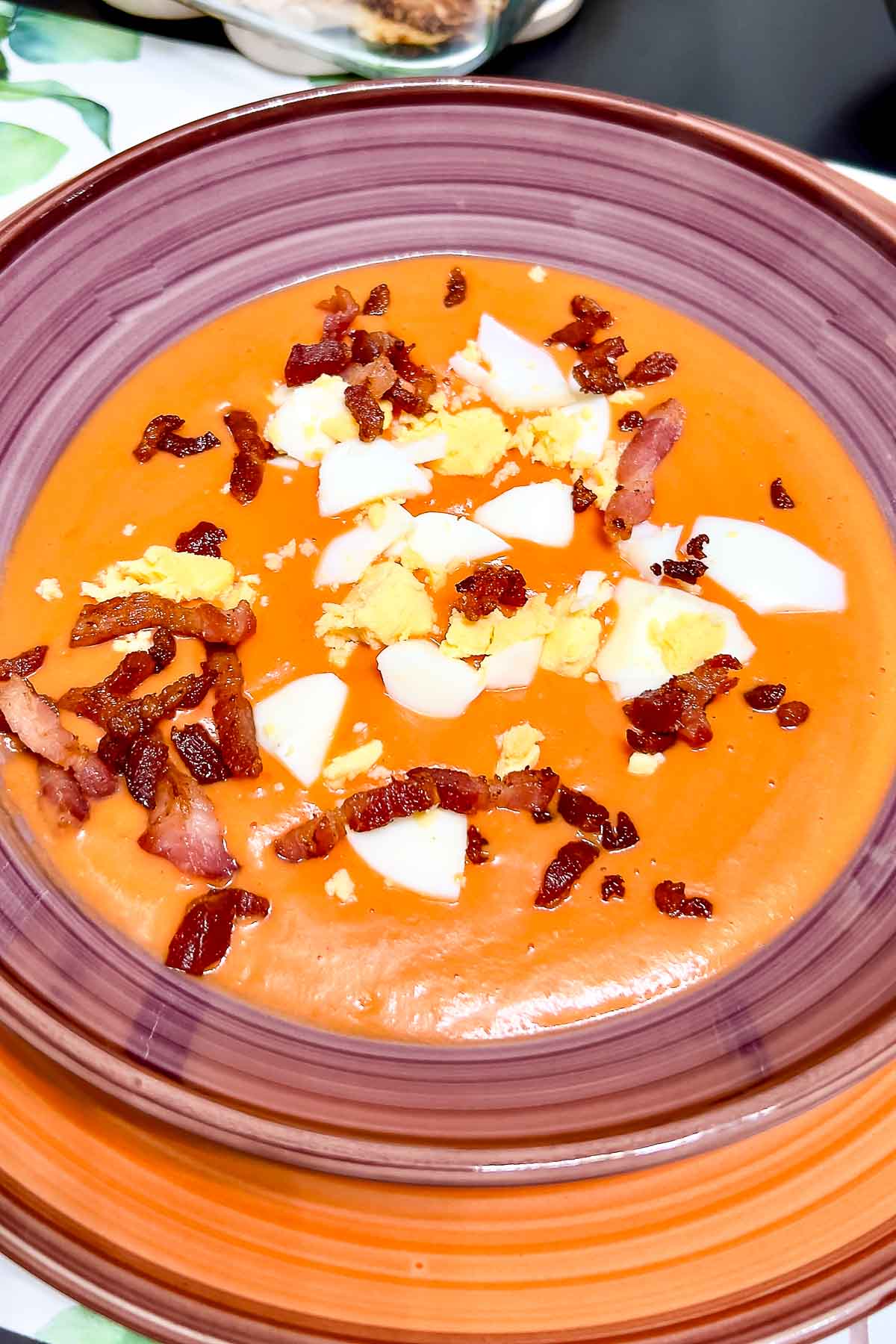
If gazpacho and salmorejo soups had a child, I think it would be porra. This cold Spanish soup has the fresh vegetables you expect in gazpacho, but bread and olive oil give it the thicker, creamy texture associated with salmorejo. The result is rich without being heavy, fresh and creamy, and, in my opinion, more interesting than either salmorejo or gazpacho.
I made mine with ripe tomatoes, cucumber, red bell pepper, onion, garlic, good bread, sherry vinegar, and extra virgin olive oil. Everything goes into the blender, and a few minutes later you have a wonderfully creamy thick gazpacho-style soup that only needs time to chill.
This recipe is part of my growing collection of Spanish recipes you can find on my website. If you like this soup, you might also like Spanish Migas With Chorizo, or this Spanish Cod In Tomato Sauce among other yummy recipes.
What Is Spanish Porra?
Porra is a cold Spanish tomato and bread soup from Andalusia. It belongs to the same family of cold soups as gazpacho and salmorejo, which explains why the recipes sometimes overlap.
Porra is traditionally associated with Andalusia in southern Spain, more exactly Malaga, where there are several variations. Some versions are quite simple, while others contain more of the vegetables commonly found in gazpacho. This is my version, which falls into the latter camp.
The defining feature is its texture. Porra contains enough bread and olive oil to become thick and creamy rather than thin and drinkable. There are regional variations, but tomatoes, peppers, bread, garlic, olive oil, vinegar, and salt form the backbone of the dish. Versions may also include cucumbers, and onion.
Porra vs. Gazpacho vs. Salmorejo
These three Spanish cold tomato soups are related, but they are not quite the same.
- Gazpacho usually contains tomatoes, cucumber, peppers, onion, garlic, olive oil, and vinegar. It is generally lighter and more fluid and may contain little or no bread.
- Salmorejo is much simpler. It is traditionally made primarily with tomatoes, bread, garlic, olive oil, and salt. The bread and olive oil produce a thick, silky texture, and it normally does not contain cucumber, peppers, or onion.
- Porra sits somewhere between the two. It has the substantial bread-and-olive-oil texture of salmorejo but can also include vegetables associated with gazpacho.
That is exactly what I like about it. You get the fresh flavor of gazpacho together with the creamy body of salmorejo.
Ingredients You Will Need
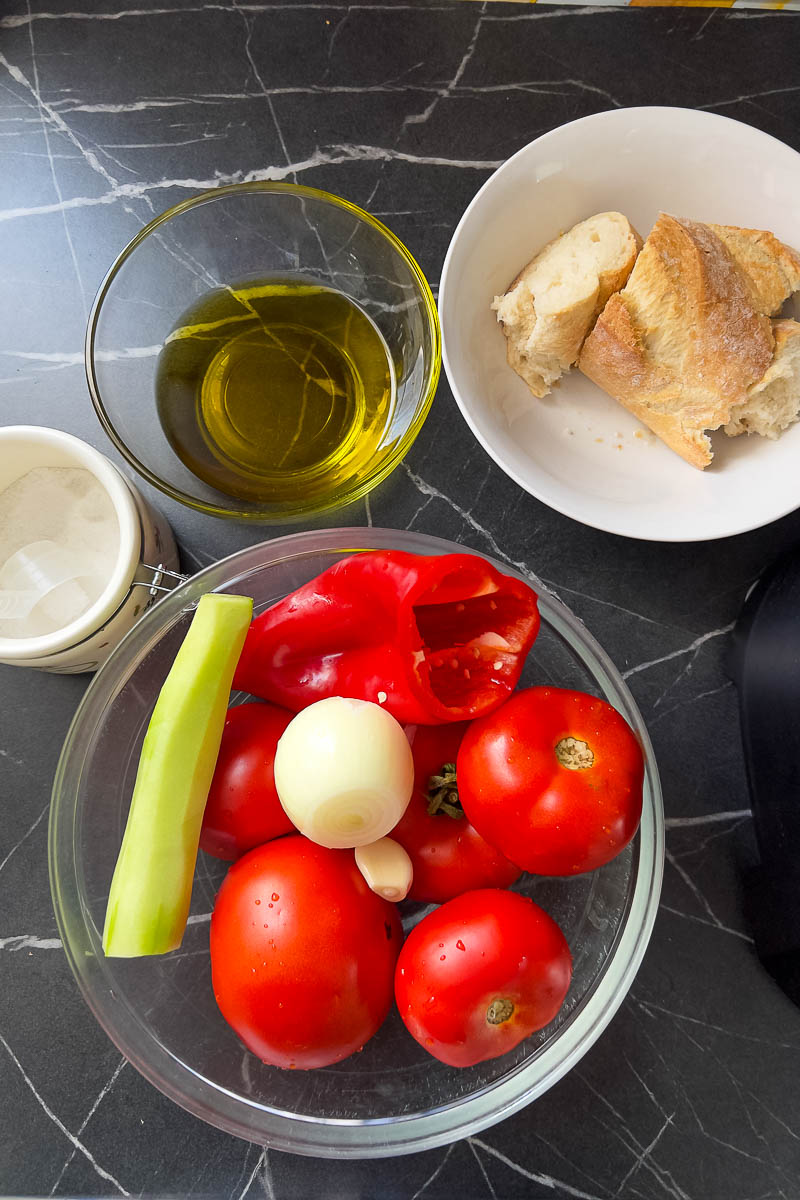
- Ripe Tomatoes: Tomatoes are the most important ingredient because this soup is never cooked. Look for ripe, juicy tomatoes with plenty of flavor. Good choices include: beefsteak tomatoes, heirloom tomatoes, and Campari tomatoes. I would not recommend Roma tomatoes. They are wonderful for sauces because they contain more flesh and less liquid, but for a cold tomato soup, I prefer tomatoes that are both flavorful and juicy.
- Cucumber: English cucumbers have thin skin and small seeds, so they can go straight into the blender. If using a regular slicing cucumber, peel it and scoop out the large seeds first for a smoother soup.
- Red Bell Pepper: I prefer red bell pepper here because it is sweeter and milder and works especially well with ripe tomatoes. Green bell peppers are more common in gazpacho, but they have a sharper, slightly grassy flavor. Mini sweet peppers can also be used, but a regular red bell pepper is the easiest choice.
- Onion: I used a yellow onion, but a sweet onion also works well. Since raw onion can easily overpower a cold soup, use a small to medium onion, or only half if yours is particularly large or strong.
- Garlic: One clove is enough for this soup, without overpowering everything else.
- Bread: Bread is what gives porra its substantial, creamy texture. I used ciabatta, which worked beautifully. A rustic Italian loaf, French-style country loaf, or another sturdy white artisan bread would also be excellent.
Note: I would avoid very soft, packaged American sandwich bread. It tends to be sweet, highly processed, and too soft for a soup like this. Slightly stale bread is ideal because it absorbs the tomato juices while still giving the soup some structure.
- Extra Virgin Olive Oil: Looking at how much olive oil you need, might seem like a lot, but olive oil is an essential part of the texture and flavor of porra. When blended with the tomatoes and bread, it emulsifies into the soup and helps create that silky, creamy consistency. Use an extra virgin olive oil you actually enjoy tasting.
- Sherry Vinegar: Sherry vinegar has a deeper, slightly nutty flavor that works especially well with tomatoes and olive oil, keeping the soup firmly in Spanish territory. If you cannot find it, red or white wine vinegar is the closest easy substitute, although the flavor will not be quite the same.
- Salt: Salt generously enough to bring out the flavor of the tomatoes. Cold food often needs a little more seasoning than you expect.
How To Make Spanish Porra Soup
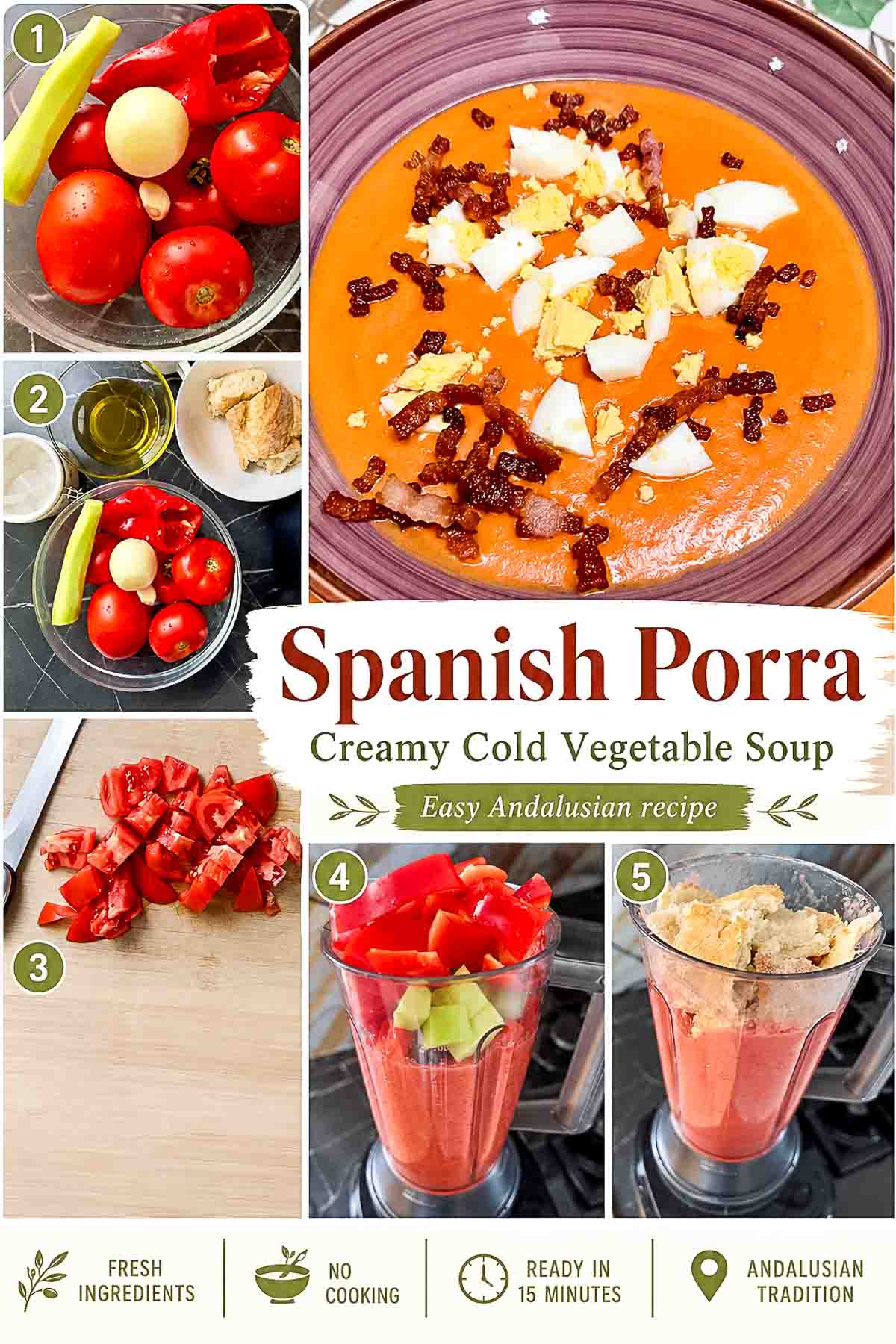
Step 1. Start by cutting the tomatoes, cucumber, red bell pepper, and onion into chunks. They do not need to be pretty; everything is going into the blender.
Step 2. Add the salt and sherry vinegar, then blend very well until the vegetables break down completely and you have a smooth, fairly liquid soup.
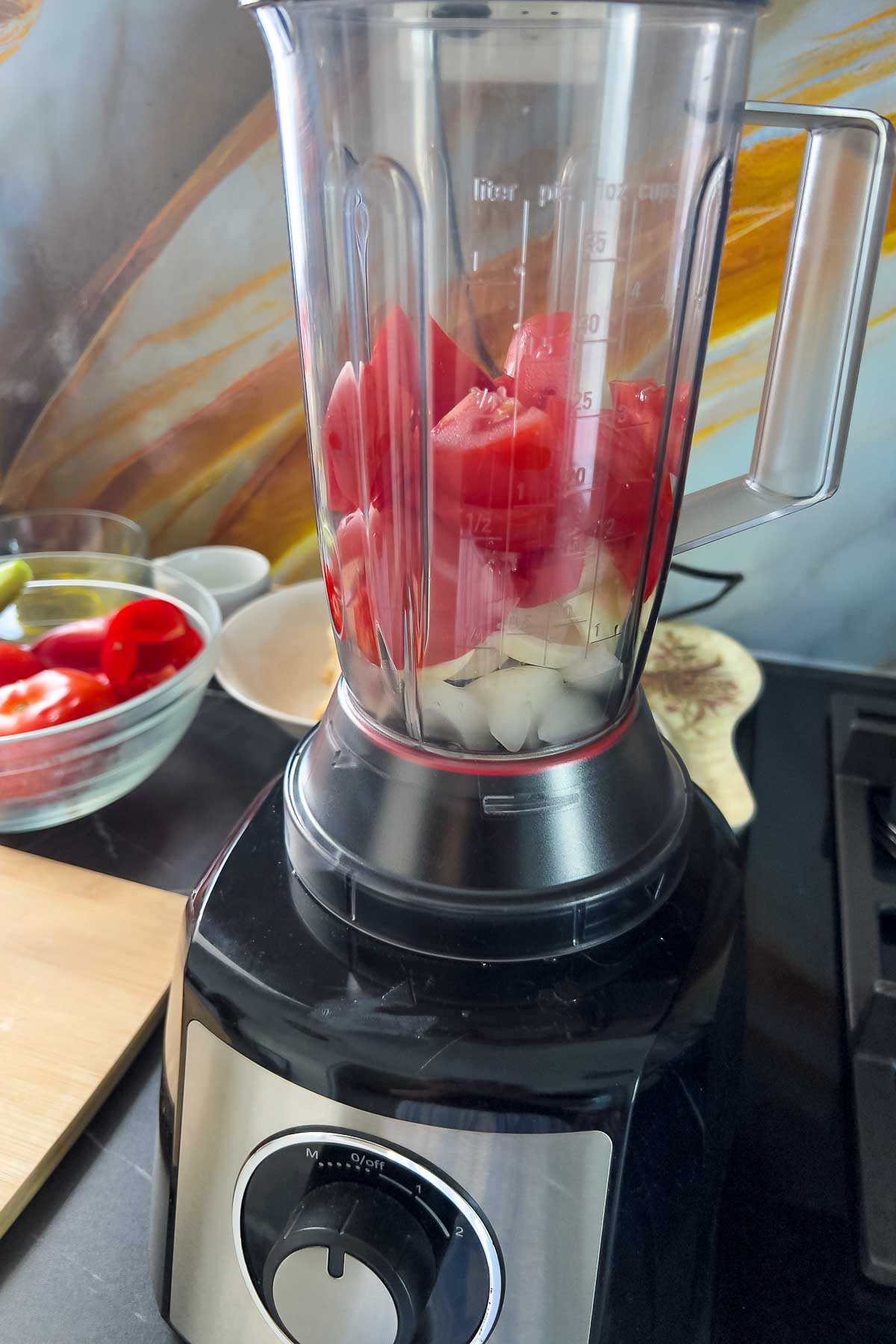
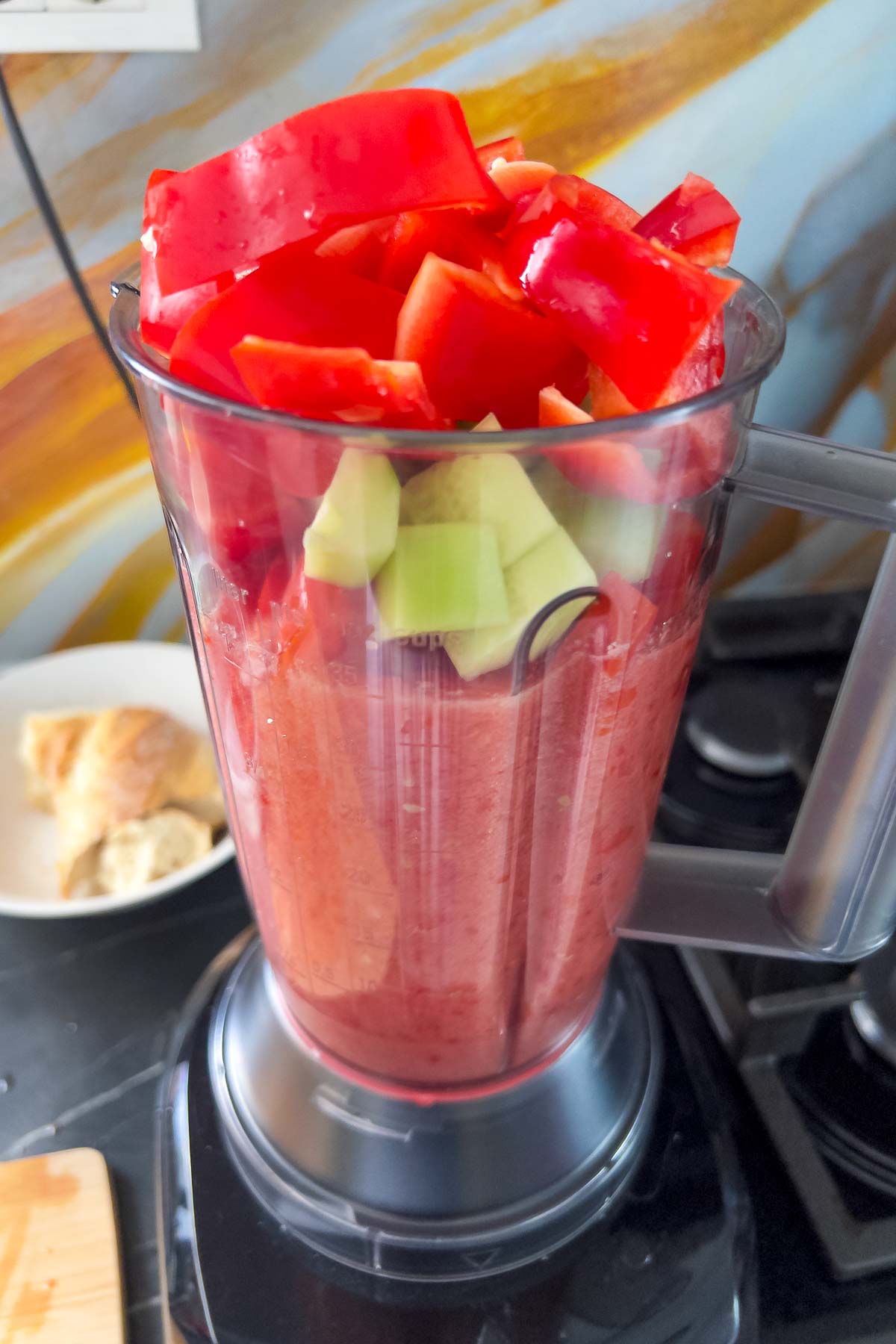
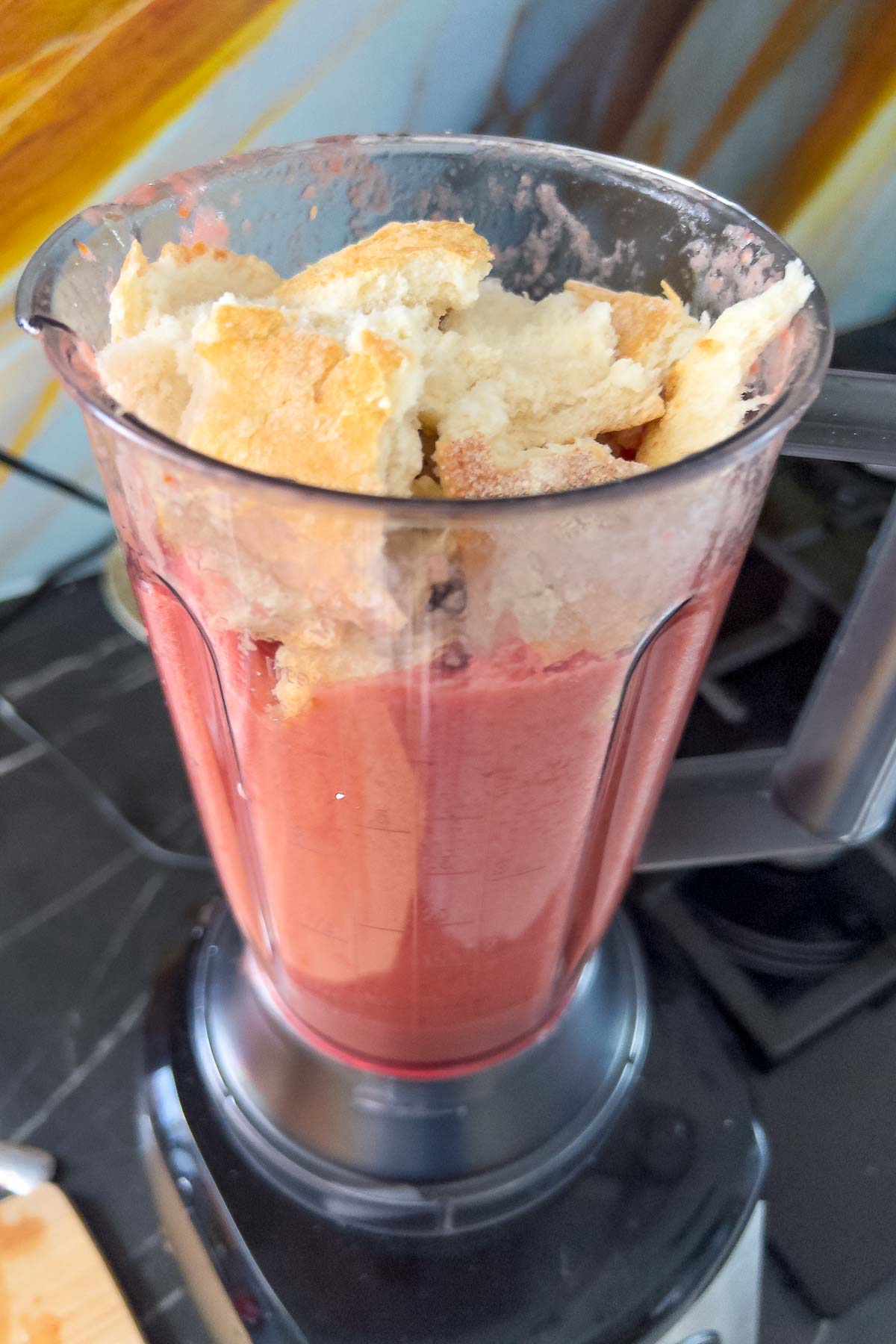
Step 3. Add the chunks of bread and blend again until the bread is fully incorporated.
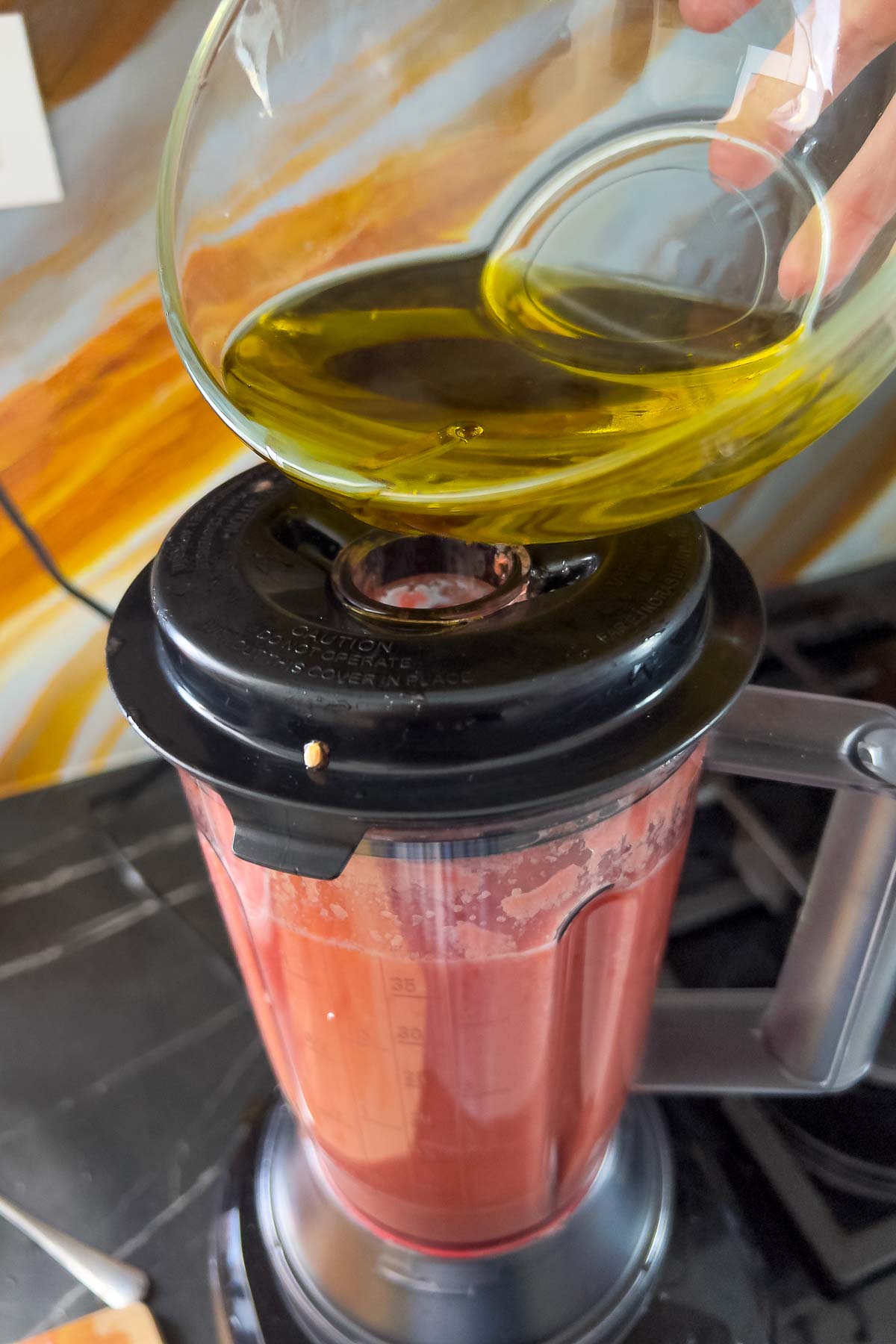
Step 4. Keep the blender running and begin adding the extra virgin olive oil very slowly in a thin stream. As the oil emulsifies with the tomatoes and bread, the soup will gradually become thicker, smoother, and creamier.
Step 5. Taste and adjust the salt or vinegar if needed. Transfer the porra to a covered container and refrigerate for a few hours, until very cold.
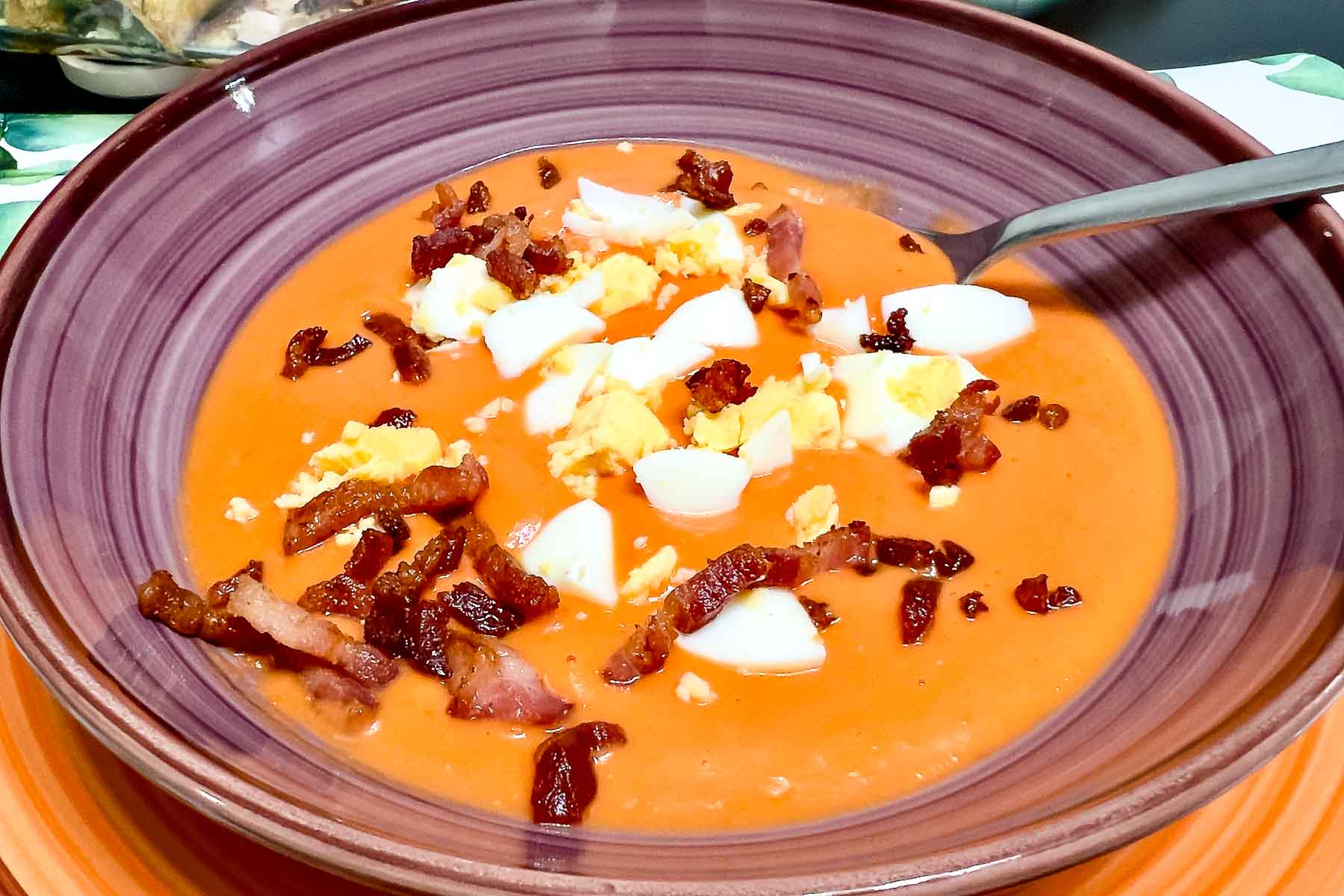
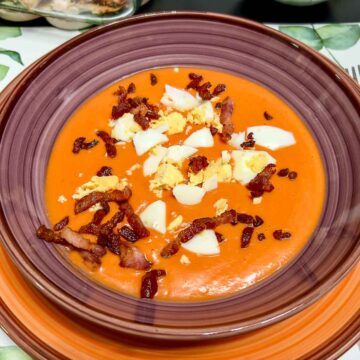
Step 6. Serve chilled, topped with finely chopped hard-boiled egg and ham, jamón serrano, prosciutto, crisp bacon, and even pieces of tuna. I used bacon in mine.
Video Recipe
How Thick Should Porra Be?
Porra soup should be thicker than salmorejo, a very creamy soup served with a spoon. Spanish gazpacho is more liquid and is meant to be served in a glass for drinking. Porra should be creamy enough to eat comfortably with a spoon and thick enough to hold toppings on the surface, but it should not feel like bread paste.
The final consistency depends partly on how juicy your tomatoes are and how dry your bread is. If yours becomes thicker than you like, simply blend in a few tablespoons of very cold water at a time until it reaches the consistency you want. Do not add a large amount at once.
How To Serve Porra
Like salmorejo, porra is often served with simple toppings. Good choices include:
- chopped hard-boiled eggs
- jamón serrano
- prosciutto
- crisp cooked bacon
- chunks of tuna( the traditional way of serving porra)
- a drizzle of extra virgin olive oil
Jamón serrano would be the traditional Spanish choice, but it is not always easy to find in an ordinary American supermarket. Prosciutto is a practical substitute because it has a similar dry-cured texture.
Bacon is obviously not Spanish, but it is readily available and tastes very good with the tomatoes, egg, and olive oil. Serve the soup in bowls as a light lunch, appetizer, or first course during hot weather.
Make It Ahead
Porra is actually better after it has spent some time in the refrigerator. Making it several hours ahead allows the flavors of the tomato, vinegar, garlic, and olive oil to settle together.
Store it covered in the refrigerator and stir before serving. If it thickens slightly while chilling, you can loosen it with a tablespoon or two of cold water. I would serve it within 2 to 3 days for the best fresh tomato flavor.
A Cold Tomato Soup Worth Trying
If you already like Spanish gazpacho or salmorejo, porra soup is worth adding to your summer recipe collection.
It combines the vegetables and freshness of gazpacho with the thick, velvety texture that bread and olive oil give salmorejo. For me, that combination is what makes it so good.
More Spanish REcipes To Love
- Spanish Hot Chocolate Recipe
- Spanish Potato Salad (Ensaladilla Rusa)
- Spanish Lemon Garlic Mushrooms Tapas
- Roasted Red Pepper Spanish Salad

📖 Recipe
Spanish Porra (Thick Gazpacho)
Ingredients
- 2 pounds ripe tomatoes cored and cut into chunks
- ½ English cucumber peeled and cut into chunks
- 1 medium red bell pepper seeded and cut into chunks
- 1 medium onion peeled and quartered
- 1 garlic clove
- 5 ounces one-day-old rustic white bread torn into chunks
- 2 tablespoons sherry vinegar
- 2 teaspoons kosher salt or to taste
- ½ cup extra virgin olive oil
For serving, optional:
- Chopped hard-boiled eggs
- Chopped jamón serrano, prosciutto, or crisp cooked bacon
- Extra virgin olive oil
- canned tuna
Instructions
- Place the tomatoes, cucumber, red bell pepper, onion, and garlic in a blender. Add the salt and sherry vinegar.
- Blend on high speed until the vegetables are completely broken down and the mixture becomes smooth and fairly liquid.
- Add the bread chunks and blend again until the bread is fully incorporated.
- With the blender running, slowly pour in the extra virgin olive oil in a thin, steady stream. Continue blending until the soup becomes thicker, smooth, and creamy.
- Taste and adjust for the salt or vinegar if needed.
- Transfer the soup to a covered container and refrigerate for at least 2 hours, or until thoroughly chilled.
- Serve cold, topped with finely chopped hard-boiled egg and jamón serrano, prosciutto, or crisp cooked bacon, and tuna pieces, if desired.
Video
Notes
- Use very ripe, juicy tomatoes such as beefsteak, heirloom, or Campari.
- If using a regular slicing cucumber, peel it and remove the large seeds.
- Use one-day-old rustic white bread such as ciabatta or a country loaf.
- Porra should be thicker than gazpacho.
- Serve well chilled with chopped hard-boiled egg and jamón serrano, prosciutto, or bacon. You can also add small pieces of canned tuna.


Comments
No Comments