

Whip up lemon polvorones (or Polvorones de Limon) as the perfect holiday gift. These traditional Spanish cookies are a Christmas staple and can be customized with flavors like cocoa, lemon, or cinnamon.
Jump to:
If you've ever spent Christmas in Spain, you've probably seen shelves overflowing with beautifully wrapped polvorones. These delicate, crumbly cookies are one of the country's most beloved holiday treats, and every family seems to have a favorite flavor.
This version, Polvorones de Limón, combines the traditional buttery, melt-in-your-mouth texture with fresh lemon zest and juice for a bright citrus flavor. They're surprisingly easy to make at home and make wonderful edible gifts during the holiday season.
What Are Polvorones?
Polvorones are traditional Spanish shortbread-style cookies that are closely associated with Christmas. They are famous for their incredibly delicate, crumbly texture that practically dissolves in your mouth.
Traditional polvorones are made with lard, toasted wheat flour, and almonds. While almond is the classic flavor, you'll also find varieties flavored with lemon, cinnamon, cocoa, coconut, sesame, or anise throughout Spain during the holidays.
This recipe is for Polvorones de Limón, one of my favorite versions after tasting several varieties during a Christmas trip to Spain.
A few years ago, I visited Spain around Christmas time. The stores were selling polvorones everywhere, and I had the opportunity to try different flavors.
From all of them, the lemon polvorones stayed with me, so this is what we will make today.
Why are they called polvorones
The name comes from the Spanish word polvo, meaning dust. One bite explains why-the cookies are so delicate they almost turn to powder as they melt in your mouth.
Because they're so fragile, traditional Spanish bakeries wrap each cookie individually in decorative paper to protect them. At home, wax paper or parchment paper works just as well if you're giving them as gifts.
Polvorones vs. Mantecados: What's the Difference?
"Polvo" in Spanish means dust, and these cookies earned the "polvorones" name because of their texture. They are very crumbly and fragile, and are sold wrapped in special paper to keep them intact. I have to tell you, they melt in your mouth!
The ones who tried the polvorones before, know what I am talking about. You probably heard before that there are two different types of traditional Spanish cookies, polvorones, and mantecados, that are very popular. You can find them all year round in the artisanal shops in touristic areas, together with the turron ( a nougat candy that usually has nuts and other flavors) and the mazapan, or the marzipan, as we know it in English.
Anyway, the polvorones and the mantecados kind of look the same, but they are not.
- Polvorones are made with prepared all-purpose flour that is baked together with the almond flour. They are baked at high temperatures, only for a few minutes.
- Mantecados, on the other hand, are also made with all-purpose flour, but sometimes the dough contains eggs. I saw recipes where almond flour is added, but the original recipe is made only with all-purpose flour.
- The ingredients in mantecados are raw (remember that we bake the flour before making polvorones), the baking time is longer, and the oven is set at a lower temperature.
- Mantecados cookies are consumed in Spain all year round, but the polvorones are baked only during Christmas.
These Spanish polvorones are also NOT the same as the Mexican polvorones or Mexican wedding cookies. Mexican polvorones are made differently and also have a very different texture.
Ingredients Needed
- Almond flour: Use finely ground blanched almond flour. Traditionally, whole almonds are toasted and ground at home, but almond flour produces excellent results.
- All-purpose flour: The flour is lightly toasted before making the dough, which gives authentic Spanish polvorones their distinctive flavor and texture.
- Powdered sugar: Creates a smooth dough and contributes to the delicate texture.
- Lard or butter: Traditional recipes use lard. Butter works well if you prefer it, but the flavor won't be quite the same.
- Fresh lemons: Use both the zest and juice for the brightest citrus flavor.
- Ground cinnamon: Adds warmth without overpowering the lemon.
How to make polvorones?
This recipe is not difficult to make, but it requires you to prepare the flour the day before. It is an easy process, but very important if you want to make real polvorones.
Step 1: Toast the flour: Toasting the flour is the secret that gives authentic Spanish polvorones their unique flavor and delicate texture. Don't skip this step.
Place the all-purpose flour on a baking tray and dry it in the oven at 300F for 30 minutes. Do the same thing with the almond flour, but only for 20 minutes.
You will end up with flour that looks clumpy, but this is how it should look like. It has to cool down completely before you use it.
When cool, the flour needs to be sifted. Make sure you measure the ingredients right. Buy a kitchen scale. Kitchen scales are cheap and instrumental in the kitchen.
The dough is made from all-purpose flour, almond flour, powder sugar, lard (if you want a traditional cookie), or butter at room temperature. To this mixture, cinnamon, lemon zest, and lemon juice are added.
Note: The dough will be very crumbly, so make sure you measure the dry ingredients precisely. If you end up with more flour than you should, your dough will be very crumbly and impossible to handle.
Don't try to work it too much. Just put it together as a ball, wrap it in plastic foil and refrigerate it for an hour.
Place the dough on a floured surface and roll it not more than ½ inch thick. Use a 1 ½ inch round cookie cutter or a small glass to cut the cookies.
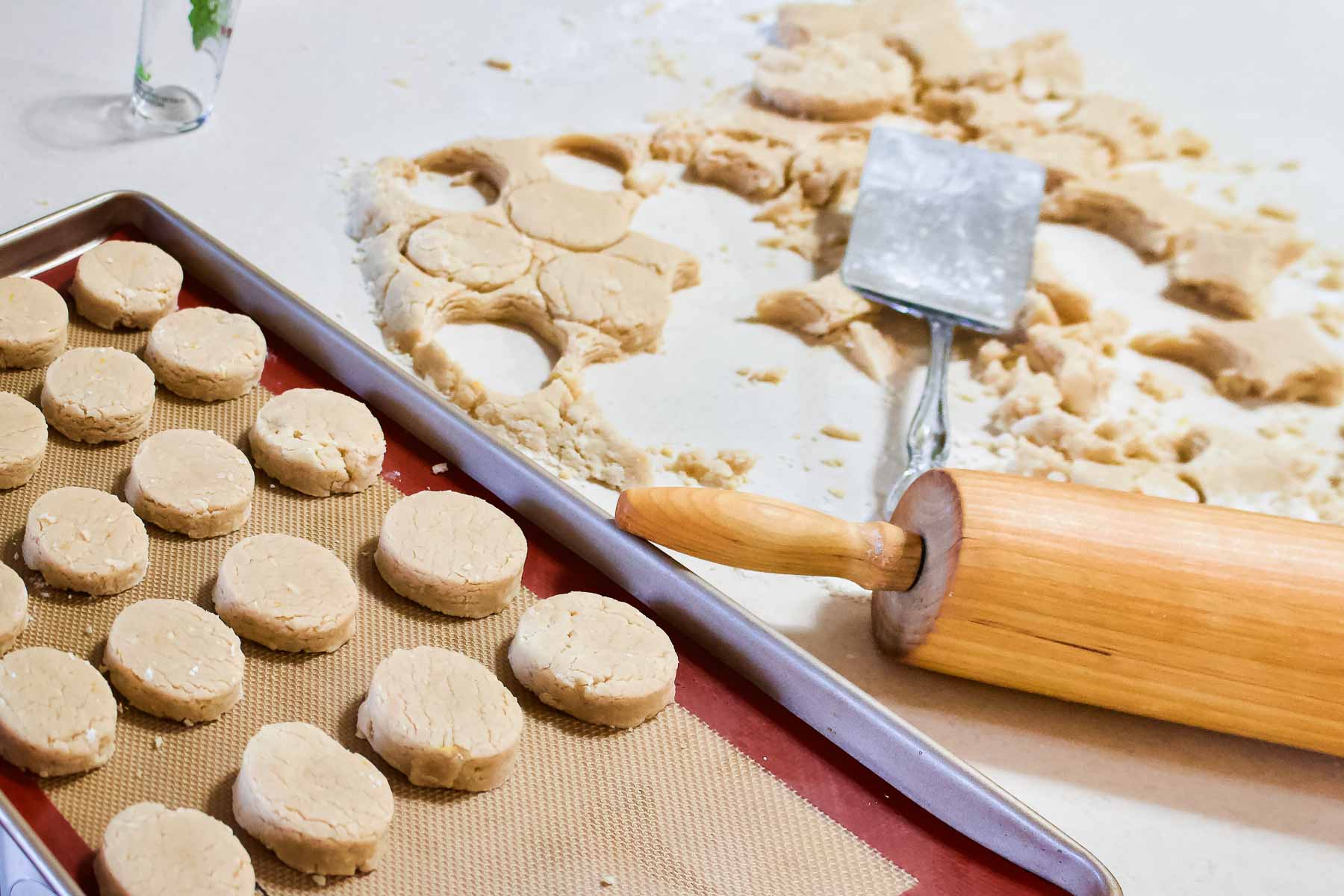
Grab them gently with a spatula and place them on a parchment paper-covered baking tray.
There is no need to place them inches apart because they don't lose their shape or rise.
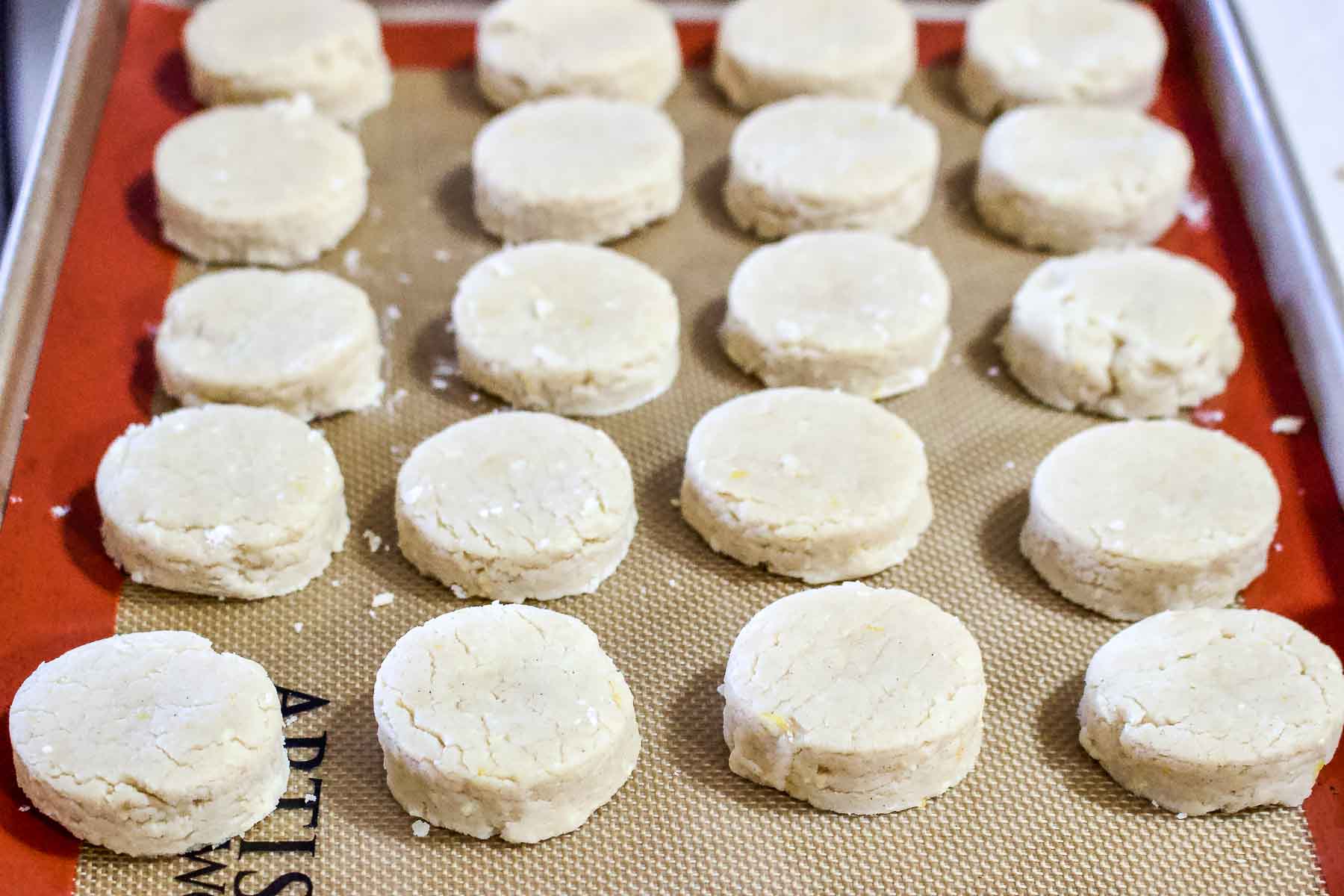
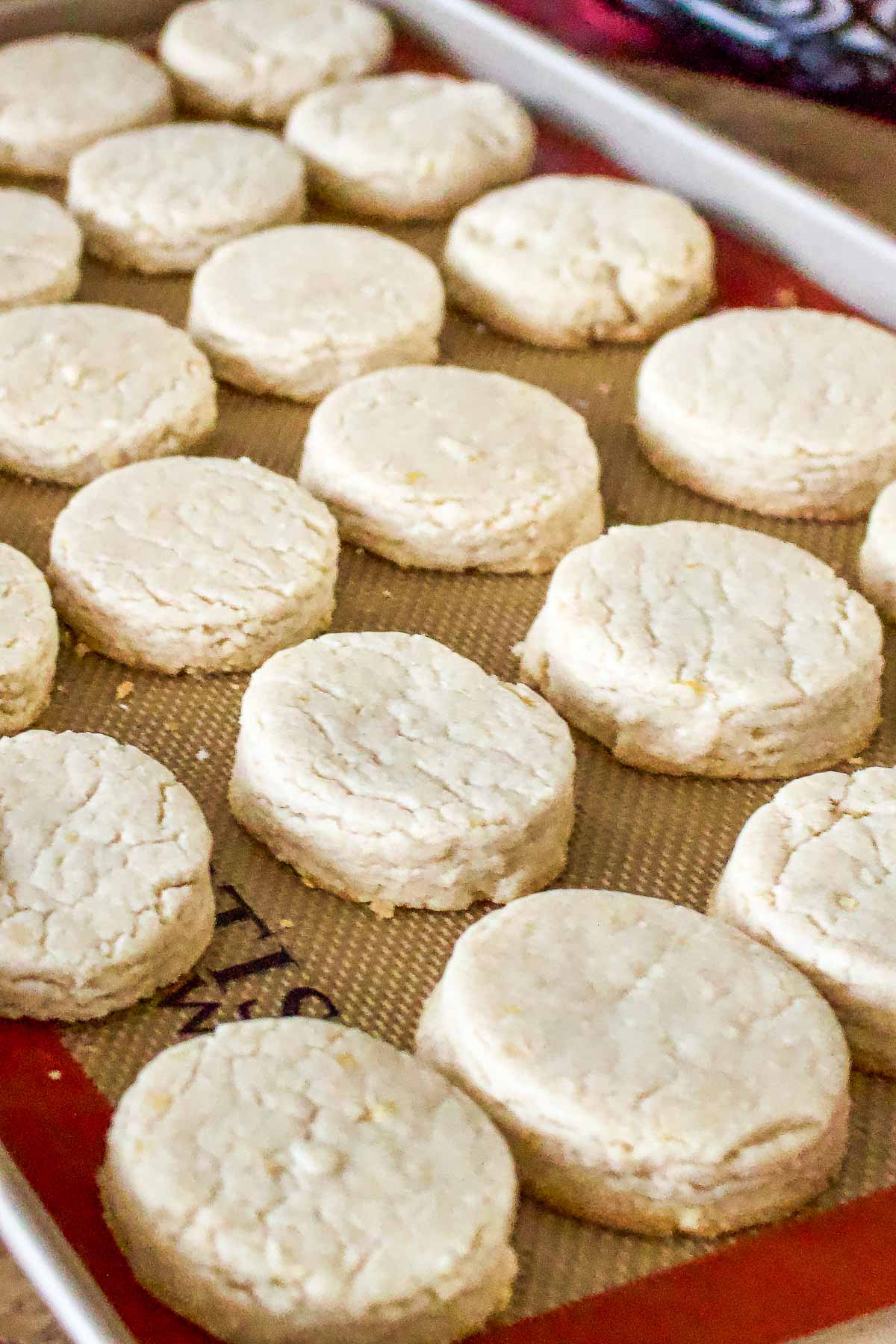
Important note: Bake them at 400F/200C for ONLY 10 minutes. If you bake them more, the cookies will dry out, and the texture will change.
The cookies need to cool down completely before you can touch them. If you mess with them right away, they will crumble.
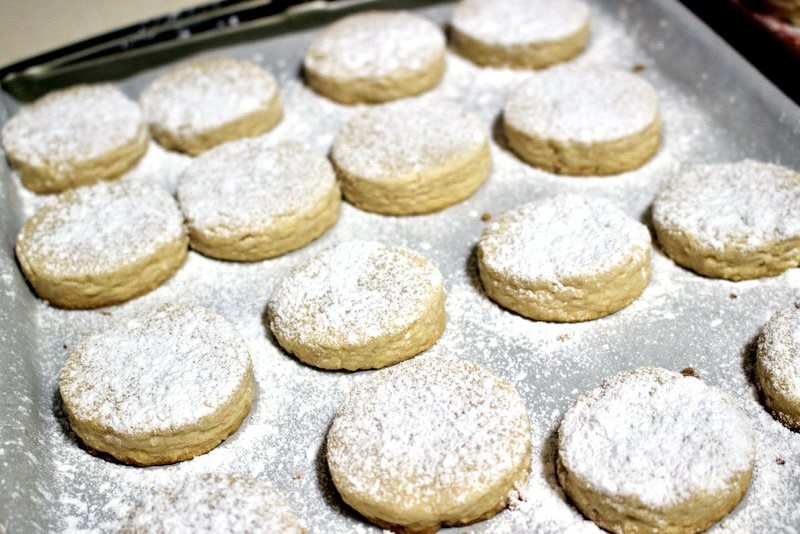
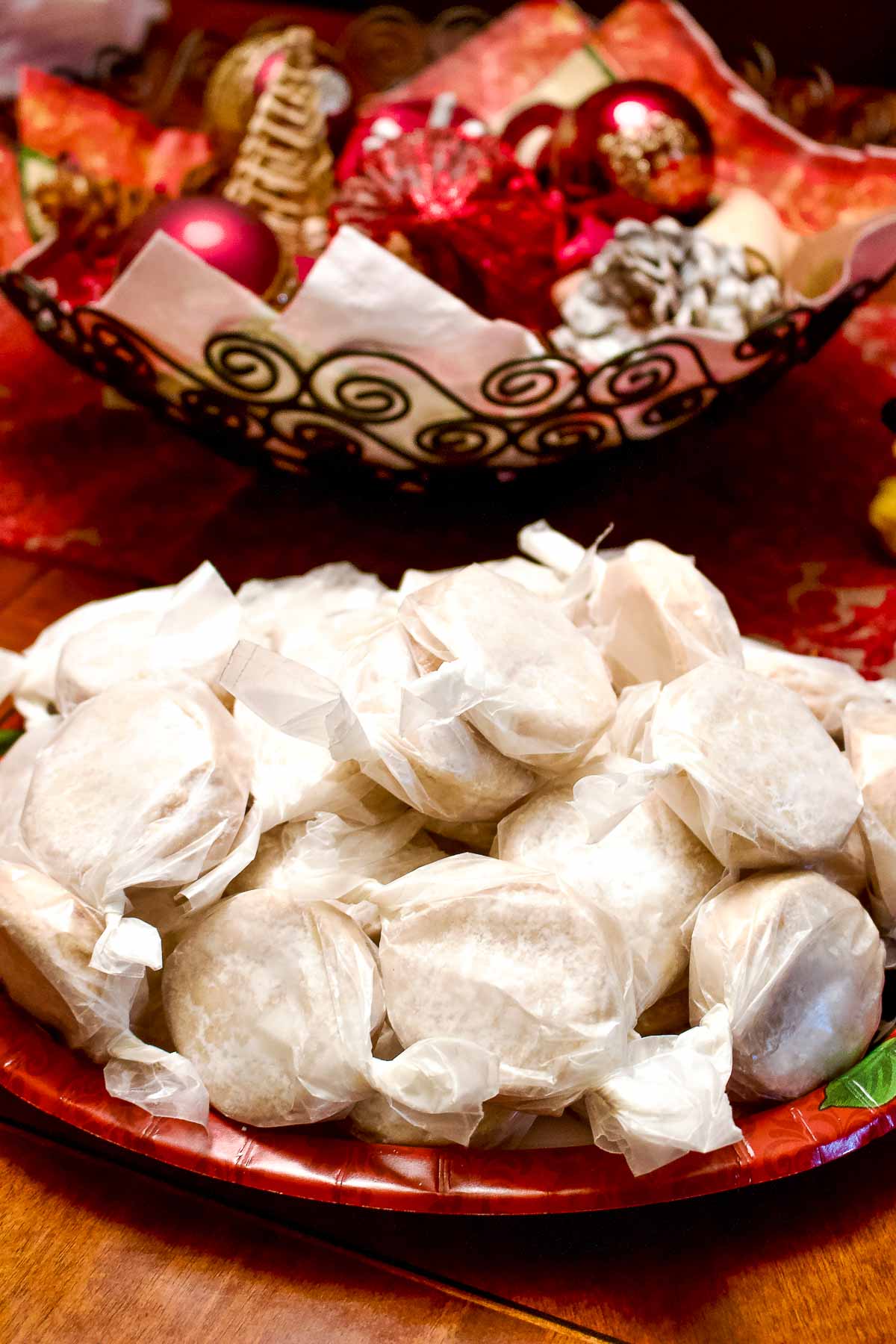
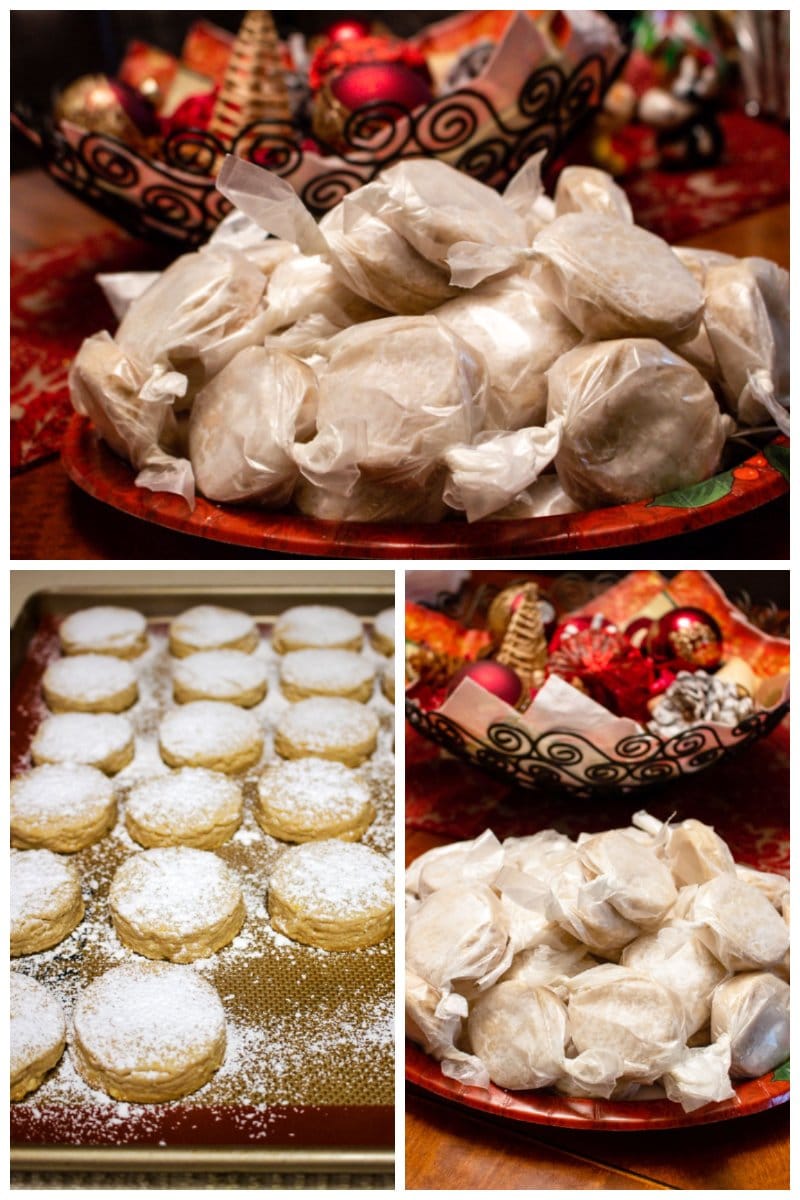
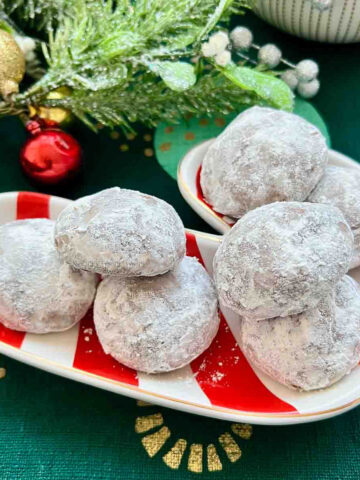
When cool, sprinkle them with powder sugar and wrap them in special polvorones paper or wax paper cut in 19x17cm or 7.4x6.7inch.
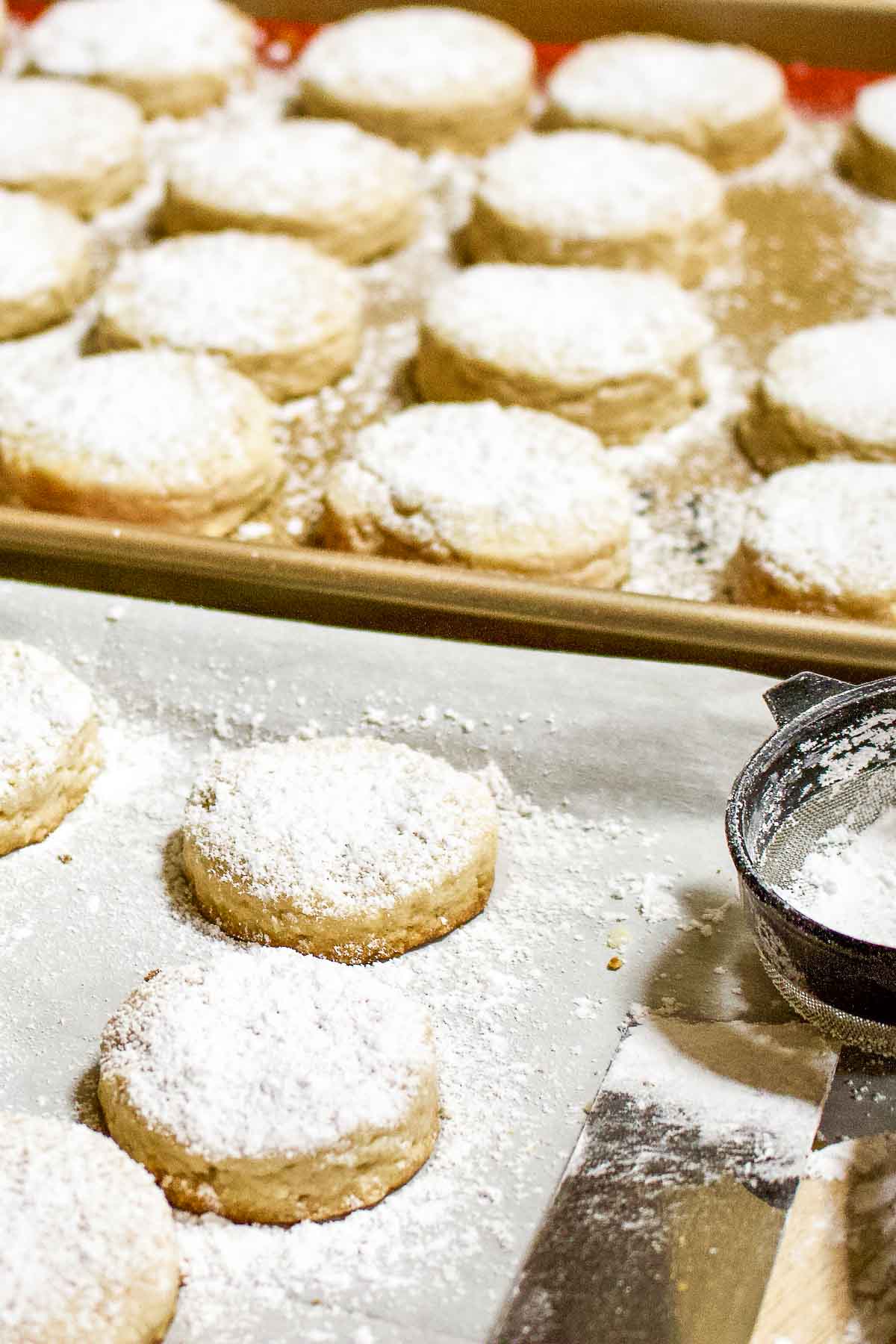
I ended up with about 40 cookies, perfect for Christmas gifts. They look good, are delicious, and are also not very difficult to make.
Storage
Store the cookies in an airtight container at room temperature for up to 3 weeks. They also freeze well for up to 3 months.
Frequent Questions:
Toasting removes moisture and creates the distinctive flavor and texture of authentic Spanish polvorones.
Yes. Butter makes delicious cookies, although traditional Spanish polvorones are made with lard.
They're supposed to be very delicate. Let them cool completely before moving them.
Absolutely. They're one of the best make-ahead Christmas cookies because they keep well for several weeks.
More Spanish Recipes
- Hot chocolate- Spanish style
- Spanish Orange and Fennel Salad
- Cod Fish in Tomato Sauce
- Spanish Orange-Almond Flan Recipe
- Spanish Porra (Creamy Cold Vegetable Soup)
More Recipes To Love
Pin For Later
📖 Recipe

Polvorones De Limon- Traditional Spanish Christmas Cookies
Equipment
Ingredients
- 1 cup almond flour
- 4 cups all purpose flour
- 2 cups powdered sugar
- 2 sticks PLUS 2 tablespoons unsalted butter at room temperature OR lard
- zest from 2 medium lemons
- ½ cup lemon juice you should have about ½ cup juice or 8 tablespoons (about 2 lemons)
- 1 teaspoon cinnamon
Instructions
How to prepare the flour before baking:
- Preheat oven to 300F/150C. Place the all-purpose flour on a baking tray and dry it in the oven at 300F for 30 minutes. Do the same thing with the almond flour, but keep it in the oven at 300F only for 20 minutes.
- Let the flour cool completely. The flour might look clumpy, but this is how it should be.
- Sift both flours together with the cinnamon and set aside.
How to make the polvorones cookies:
- Lard or butter should be at room temperature.
- Cream together lard or butter with the powder sugar. You can do it by hand or with a mixer.
- Add the mixture of all-purpose flour and almond flour over the lard and sugar.
- Add the lemon zest and juice.
- Mix until you have a crumbly dough. Do not overmix.
- Place the dough on a floured surface and bring it together into the shape of a ball. Wrap it in plastic foil and refrigerate it for an hour.
- Preheat oven to 400F/200C.
- Cover cookie trays with parchment paper.
- Roll the dough about 0.5inch/1.5cm thick on a lightly floured surface.
- Use a cookie cutter or a round glass(approx. 1.4inch diameter or 3.5 cm)and cut the dough.
- Grab them with a spatula and place them on the cookie tray. Bake at 400F/200C for no more than 10 minutes. Remove from the oven and let them cool on the tray.
- TIP: Do not try to remove the hot cookies from the tray as they are very crumbly. When cool, the cookies keep their shape. Also, do not keep them in the oven for more than 10 minutes. The cookies will dry out and change their texture.
- When the cookies are completely cool, dust them with powdered sugar and wrap them in a special paper for polvorones or wax paper cut in 7.4x6.7 inches(19x17cm).
- The polvorones last a long time if kept in dry, cool places. They make great gifts for the holidays.
Notes
- Toasting the flour is essential for authentic flavor and texture.
- Weighing the flour gives the most reliable results.
- The dough will be crumbly but should hold together when pressed.
- Do not overbake. Ten minutes is enough.
Christopher Smith says
This dough was very very dry I'm not sure if I need to add a little more something to it but they were very lemony so any more lemon juice probably wouldn't have been a good idea otherwise they taste fantastic
The Bossy Kitchen says
Hi Christopher, you did not do anything wrong and the dough is supposed to be that dry. You can actually see in the pictures I posted on the recipe that my dough was very dry also. Traditionally, the cookies are wrapped in a special paper, so they don't fall apart. They feel like dust, therefore the name comes from there(polvo=dust). I am glad you enjoyed them though. They are very different but special little gems.
Toni says
I would the recipies for the cinnamon and almond cookies too! They sound amazing. Making the lemon ones today!
Maria says
How much juice in measurement? All lemons are different sizes.
The Bossy Kitchen says
You will need more or less about 1/2 cup of lemon juice, or 8 tablespoons approx. I just corrected the recipe and clarified that.Thank you for catching that and thank you for the visit! I hope you make the cookies!
David Edmondson says
Hey, I think you have an error in your lard conversions. 2 tablespoons of lard should weight only 25g, not 250g, or you're calling for 1.25 cups of lard. For now, I'm going to go with the 2 tablespoons, as it seems that's more in line with the rest of the recipe and others I've seen.
The Bossy Kitchen says
Hi David. It is not a mistake.The recipe tells you this: 2 sticks of butter PLUS 2 tablespoons/ 8.8oz/250 g lard or butter at room temperature. It means that you can use butter or lard and you will need 250g of fat or 8.8oz of it. You also have 4 cups of flour, 1 cup of almond flour and 2 cups of powder sugar, for a total of 7 cups of dry ingredients.You need that fat. Also, keep in mind that the texture of the dough will be on the dry side, which is what you need to obtain that crumbly, sandy texture of the baked cookie.
Courtney says
My dough was too hard to roll out and immediately crumbled when I tried to flatten it with the rolling pin. I was certain I used the right amount of flour. Is it possible I over mixed or the butter was too cold? It was really hard to form balls so guessing it was too dry. Can you add milk in that case or are you done? The dough tasted good but need to trouble shoot for next time. Any advice is greatly appreciated.
The Bossy Kitchen says
Hi Courtney, I am sorry the dough was so dry. I am not sure what the problem was. This year, I noticed some weird things happening to my baked goods made with American unsalted butter. There are also multiple bloggers I heard complaining that butter doesn't behave the way it should. Next time, I would try to use European butter, like Kerrygold or some other brand you can find. The European butter has a higher fat content and can be used instead of lard. The butter or lard needs to be at room temperature but not melted. This will help coat the flour, so you don't end up with a dough that cannot be handled.
Make sure you get a scale to measure the flour precisely. If you pack the flour into a cup a little bit more than you should, you end up with more flour than you need.
Please do not add milk or anything else if it is not in the recipe, as you will change the texture of the cookies. They are supposed to be very crumbly. If you ever had Spanish polvorones, you will know what I am talking about. They have a very unique texture.
If you end up with a super crumbly dough and you used regular butter, try to add 2 more tablespoons of butter to the dough. The butter will help bring the dough together, without changing the texture too much. I hope this helps. Happy holidays!